
CBMC EG4 24DC/1-8A NO
-
Disjoncteur de protection d'appareils électronique
1065730
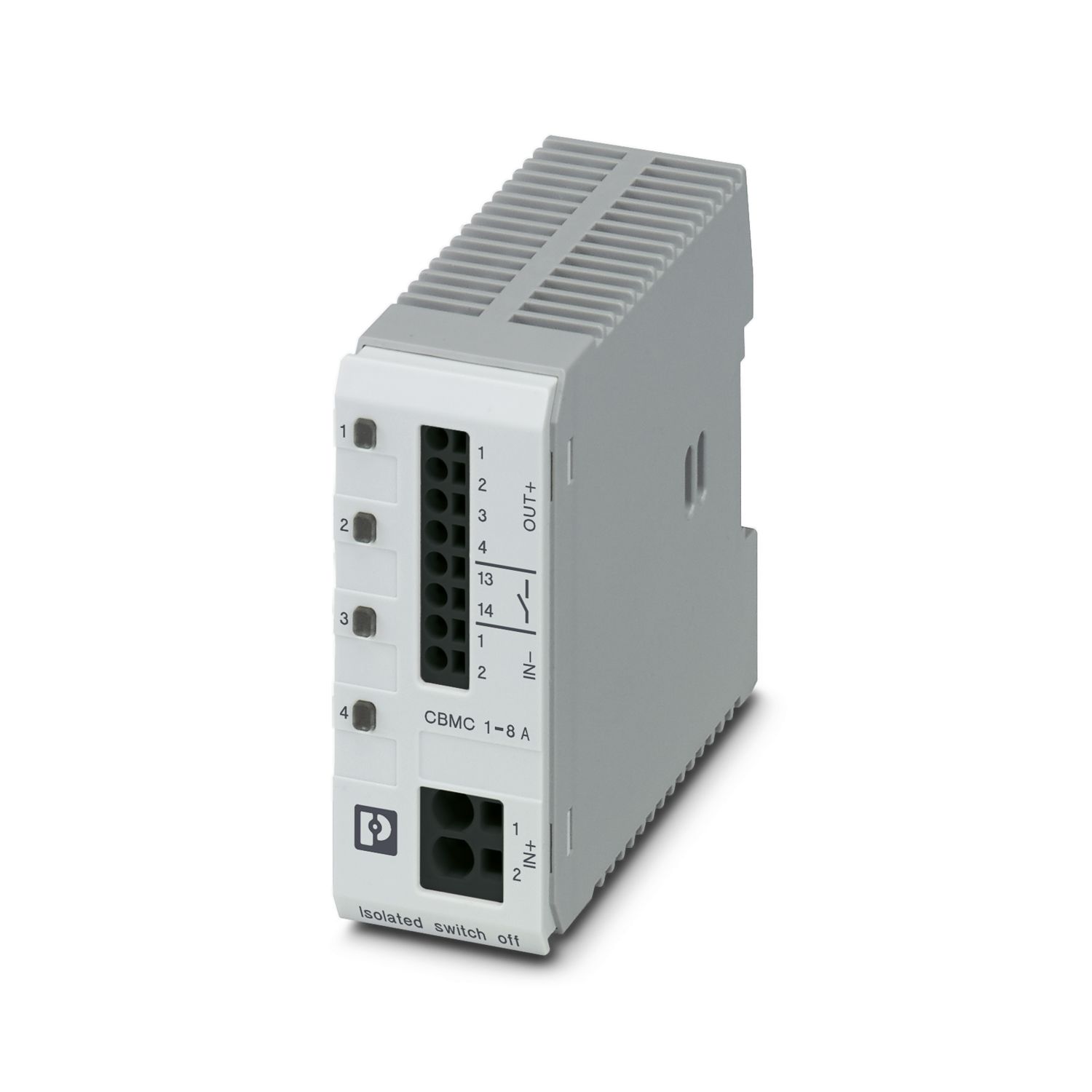
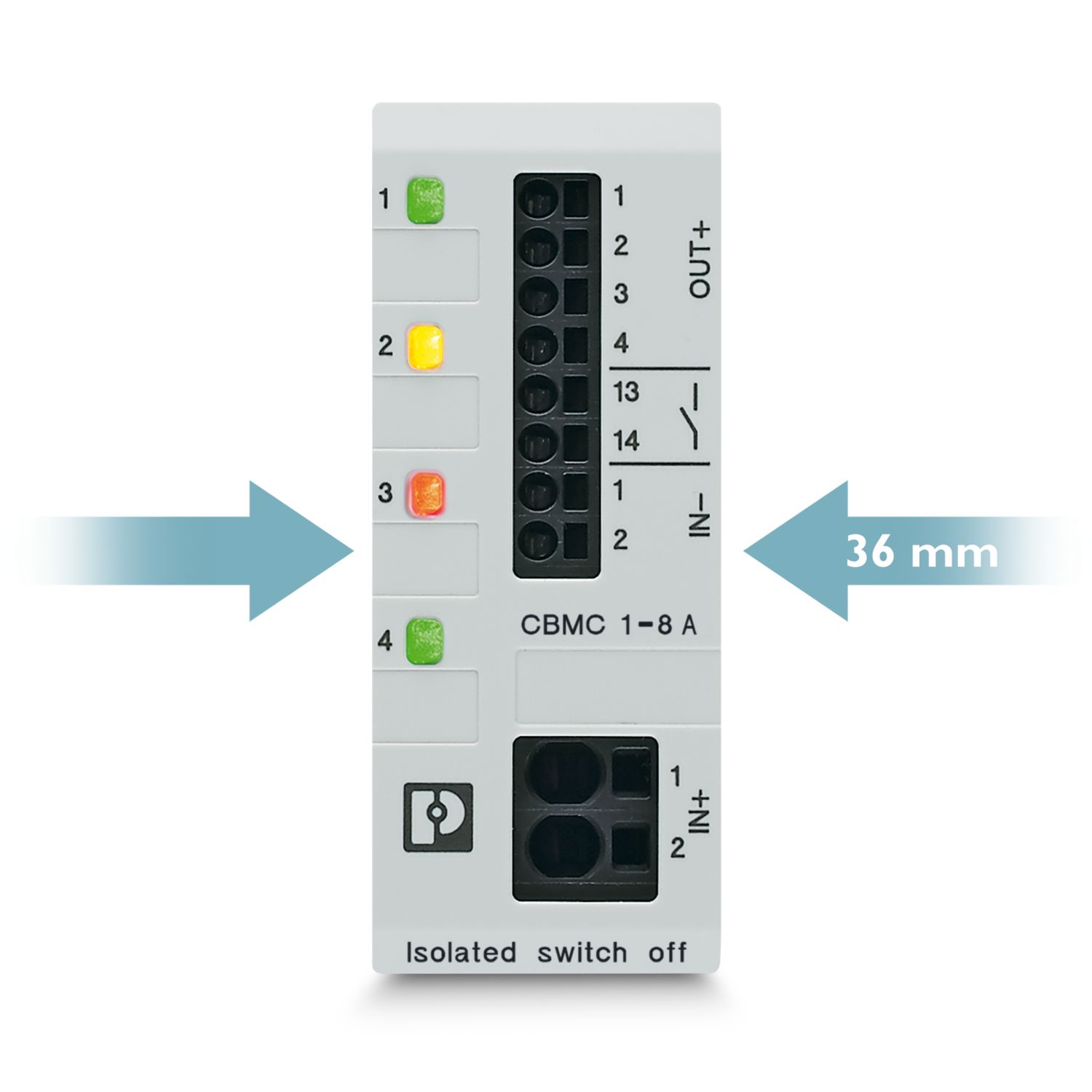
Disjoncteur d'appareil électrique, à plusieurs canaux, avec isolation galvanique pour la protection de quatre récepteurs à 24 V DC en cas de surcharge et de court-circuit. Avec dispositif de verrouillage électronique des intensités nominales réglées. Pour une installation sur des rails DIN.
Informations détaillées concernant le produit
| Généralités | |
| Remarque | Les courts-circuits puissants répétés peuvent réduire l'intégrale de fusion du fusible en amont intégré. |
| Raccordez toujours le pôle négatif au bloc de jonction IN- afin d'assurer l'alimentation en tension. Il est interdit de renvoyer les courants inverses provenant des charges dans l'alimentation en tension via le raccord IN- du disjoncteur de puissance. | |
| Type de produit | Disjoncteur de protection d'appareils, électronique |
| Gamme de produits | CBMC |
| Type | Module pour profilés monobloc |
| Nombre de pôles | 1 |
| Nombre de voies | 4 |
| Propriétés d'isolation | |
| Classe de protection | III |
| Degré de pollution | 2 |
| Généralités | |
| Tension de service | 18 V DC ... 30 V DC |
| Tension de référence | 24 V DC |
| Courant de référence IN | max. 32 A (IN+) |
| max. 40 A (Par pôle en cas de pontage d'autres appareils via IN+) | |
| Courant de référence IN | 1 / 2 / 3 / 4 / 5 / 6 / 7 / 8 A DC (réglable par canal de sortie) |
| Courant assigné (préréglé) | 4 A |
| Tension de tenue aux chocs assignée | 0,5 kV |
| Mode de déclenchement | EG (à isolation électronique galvanique) |
| Résistance à l'alimentation de retour | max. 35 V DC |
| Fusible requis en amont | Uniquement nécessaire si Imax de l'alimentation > puissance de coupure en cas de court-circuit. Élément Fail-Safe intégré. |
| 30 A (gG, alimenté par un bloc d'alimentation linéaire, Icn ≥ 200 A) | |
| Pouvoir de coupure de court-circuit | 300 A |
| Rigidité diélectrique | max. 35 V DC (Circuit de charge) |
| Fusible | électronique |
| Rendement | > 99 % |
| Courant de repos I0 | typ. 75 mA |
| Puissance dissipée | typ. 1,8 W (à vide) |
| < 7 W (en régime nominal) | |
| Durée d'initialisation du module | 1,6 s |
| Temps d'attente après déconnexion d'un canal | 5 s (en surcharge / court-circuit) |
| Tolérance de mesure I | ± 15 % |
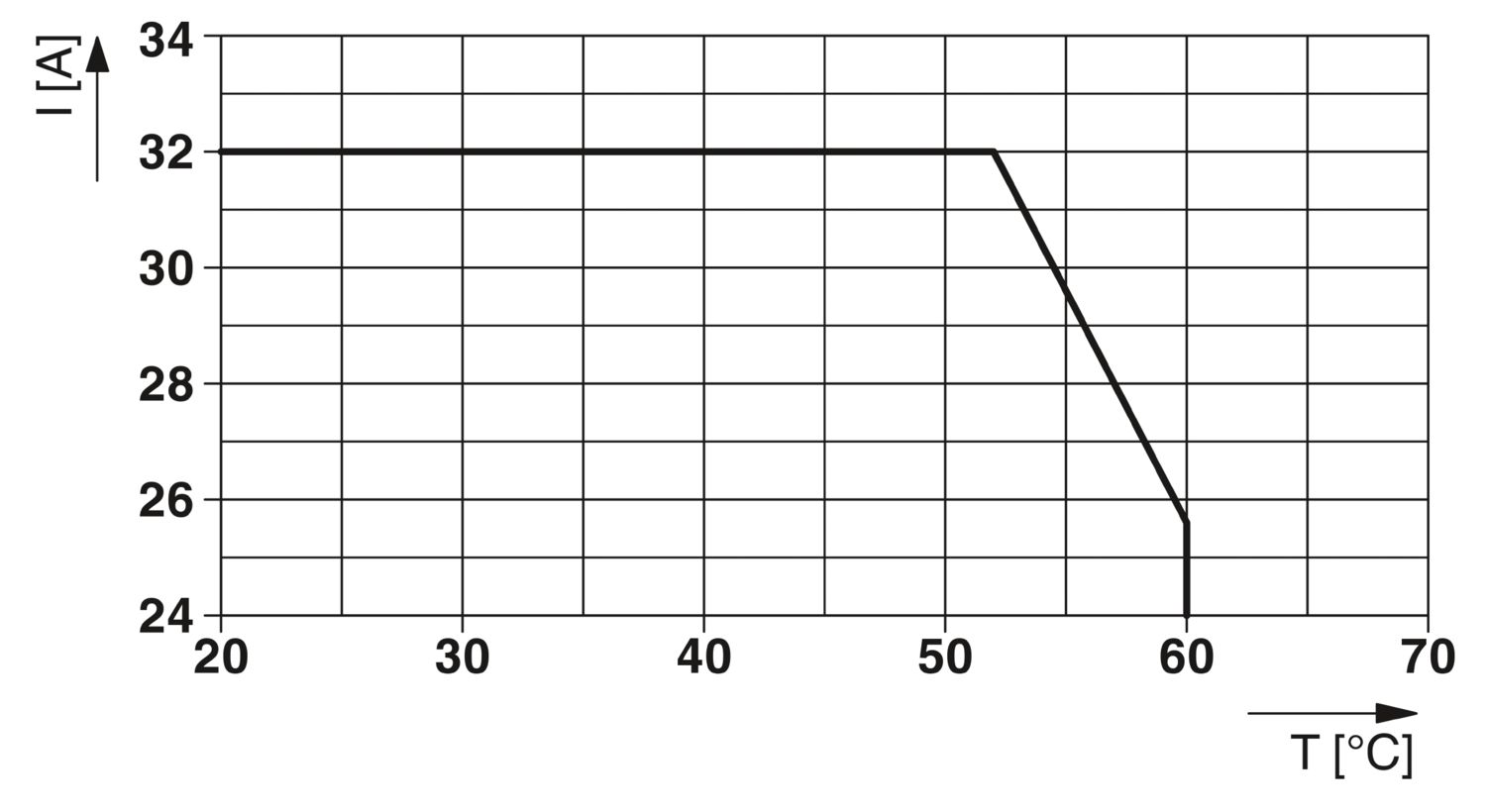
| Derating de température | 25 A DC (à 60 °C) |
| 28 A DC (à 56 °C) | |
| 32 A DC (à 52 °C) | |
| MTBF (IEC 61709, SN 29500) | 5000000 h (à 25 °C avec 21 % de charge) |
| 2000000 h (à 40 °C avec 34,25 % de charge) | |
| 321056 h (à 52 °C avec 100 % de charge) | |
| Elément Fail Safe | 15 A DC (par canal de sortie) |
| Type de contact | Relais, contact NO |
| Circuit de charge | |
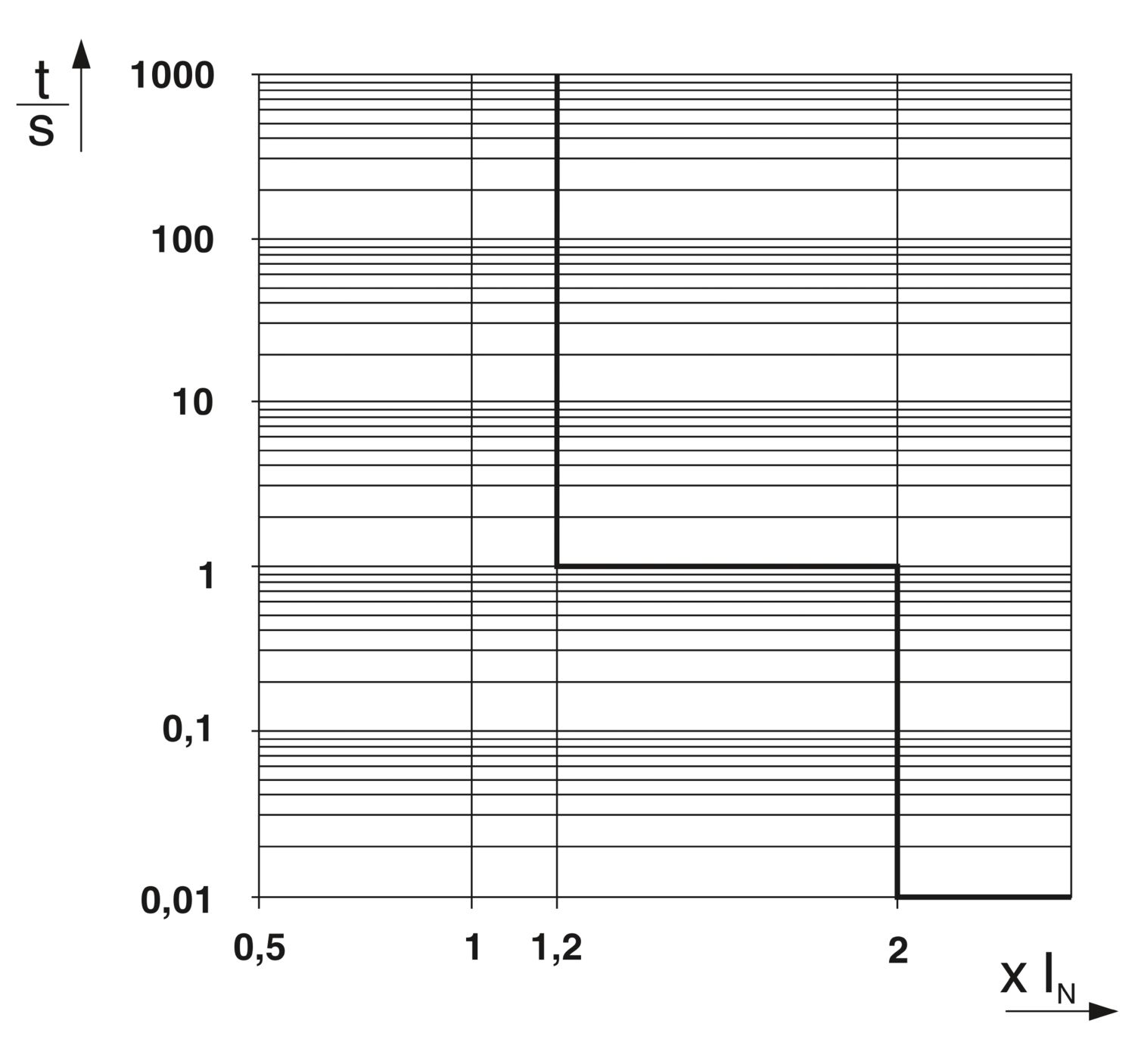
| Temps de coupure | ≤ 10 ms (en cas de court-circuit > 2,0 x IN) |
| 1 s (1,2 ... 2,0 x IN) | |
| Arrêt en cas de sous-tension | ≤ 17,8 V DC (active) |
| ≥ 18,8 V DC (désactivé) | |
| Arrêt en cas de surtension | ≥ 30,5 V DC (active) |
| ≤ 29,5 V DC (désactivé) | |
| Charge capacitive max. | 45000 µF (En fonction du réglage du courant et du courant de court-circuit disponible) |
| Temporisation à l'enclenchement | 0,1 s (par canal de sortie) |
| Affichage/signalisation à distance | |
| Dénomination connexion | Circuit de signalisation à distance |
| Fonction de commutation | Contact NO |
| Tension de service | 0 V DC ... 30 V DC |
| Courant de service | 100 mA DC |
| Circuit principal IN+ | |
| Type de raccordement | Raccordement Push-in |
| Longueur à dénuder | 15 mm |
| Section de conducteur souple | 0,2 mm² ... 6 mm² |
| Section de conducteur rigide | 0,2 mm² ... 10 mm² |
| Section conduct. AWG | 24 ... 8 |
| Section de conducteur souple avec embout et douille en plastique | 0,25 mm² ... 4 mm² |
| Section de conducteur souple avec embout, sans douille en plastique | 0,25 mm² ... 6 mm² |
| Circuit principal IN- | |
| Type de raccordement | Raccordement Push-in |
| Longueur à dénuder | 10 mm |
| Section de conducteur rigide | 0,2 mm² ... 2,5 mm² |
| Section conduct. AWG | 24 ... 12 |
| Section de conducteur souple avec embout et douille en plastique | 0,25 mm² ... 1,5 mm² |
| Section de conducteur souple avec embout, sans douille en plastique | 0,25 mm² ... 2,5 mm² |
| Circuit principal OUT | |
| Type de raccordement | Raccordement Push-in |
| Longueur à dénuder | 10 mm |
| Section de conducteur rigide | 0,2 mm² ... 2,5 mm² |
| Section conduct. AWG | 24 ... 12 |
| Section de conducteur souple avec embout et douille en plastique | 0,25 mm² ... 1,5 mm² |
| Section de conducteur souple avec embout, sans douille en plastique | 0,25 mm² ... 2,5 mm² |
| Circuit de signalisation à distance | |
| Type de raccordement | Raccordement Push-in |
| Longueur à dénuder | 10 mm |
| Section de conducteur rigide | 0,2 mm² ... 2,5 mm² |
| Section conduct. AWG | 24 ... 12 |
| Section de conducteur souple avec embout et douille en plastique | 0,25 mm² ... 1,5 mm² |
| Section de conducteur souple avec embout, sans douille en plastique | 0,25 mm² ... 2,5 mm² |
| Canal LED arrêt | désactivé (Canal désactivé) |
| Canal LED jaune | allumé (Canal mis en circuit, charge du canal > 80 %) |
| clignote (Mode de programmation actif) | |
| Canal LED vert | allumé (Canal activé) |
| Canal LED rouge | allumé (Canal désactivé, erreur de relais, surtension ou sous-tension active) |
| s'éclaire temporairement (Canal mis hors circuit, phase de refroidissement 5 s, déclenchement de surcharge ou de court-circuit) | |
| clignote (Canal mis hors circuit, prêt à la remise en circuit, déclenchement de surcharge ou de court-circuit) | |
| clignote deux fois (Canal désactivé, dépassement de la limitation de courant totale des appareils de 32 A) |
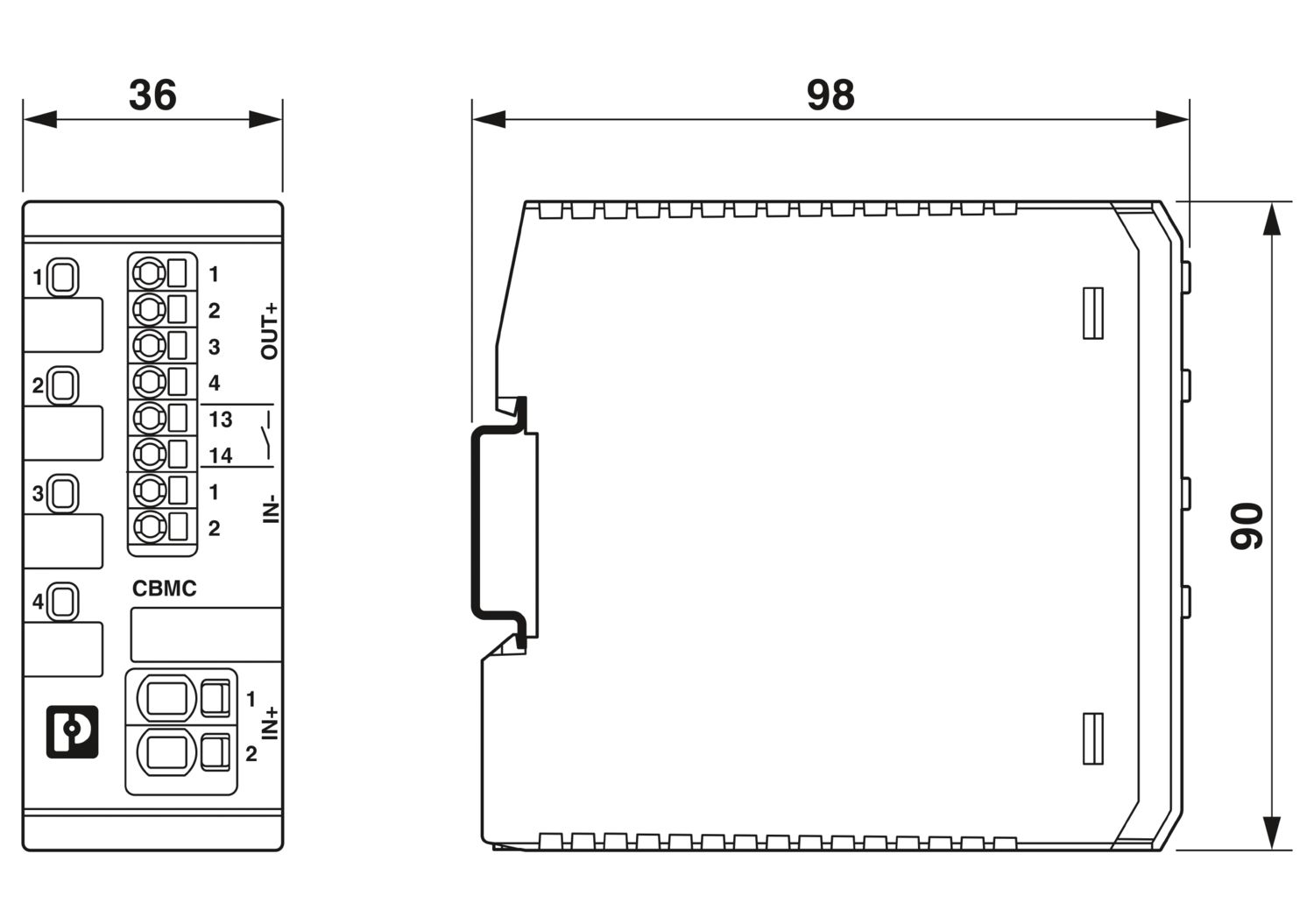
| Dessin coté |
|
| Largeur | 36 mm |
| Hauteur | 90 mm |
| Profondeur | 98 mm (avec profilé 7,5 mm) |
| Couleur | gris clair (RAL 7035) |
| Matériau | PC |
| PA 6.6 | |
| PA 6.3T | |
| POM | |
| Classe d'inflammabilité selon UL 94 | V-0 |
| Conditions ambiantes | |
| Indice de protection | IP20 |
| Température ambiante (fonctionnement) | -25 °C ... 60 °C |
| Température ambiante (stockage/transport) | -40 °C ... 70 °C |
| Altitude | ≤ 3000 m jusqu'à 52 °C (amsl) |
| ≤ 4000 m jusqu'à 46 °C (amsl) | |
| Test hygrométrique | 96 h, 95 % RH, 40 °C |
| Test aux gaz nocifs | |
| Repérage | ISA S71.04.2013 G3 Harsh Group A |
| Normes/prescriptions | EN 61000-6-2 |
| Remarque | CEM - immunité pour les domaines industriels |
| Normes/prescriptions | EN 61000-6-3 |
| Remarque | CEM - émission de perturbation pour les zones résidentielles, commerciales et de l'industrie légère |
| Normes/prescriptions | EN 60068-2-78 |
| Remarque | Influences environnementales - oscillation (sinusoïdale) |
| Normes/prescriptions | EN 50178 |
| Remarque | Equipement d'installations à courant fort avec équipements électriques |
| Type de montage | Profilé : 35 mm |

Avantages
Remplacement aisé des appareils sans nouvelle planification grâce au format compact et au réglage individuel
Circuits électriques réglables sans outil grâce à la commande à bouton unique des boutons à LED
Sécurité accrue de l'installation en cas de maintenance, grâce au déverrouillage avec isolation galvanique
Exploitation en toute sécurité de l'installation grâce à la surveillance brevetée de l'isolation galvanique
Protection fiable contre toute modification accidentelle des valeurs de courant grâce au verrouillage électronique
Récupération immédiate de l'état de fonctionnement grâce aux LED d'état aux couleurs des feux tricolores
Questions fréquemment posées
Existe-t-il un tutoriel concernant le matériel, et qui explique les fonctions du CBMC ?
Oui, il existe un tutoriel concernant le matériel, et qui permet de se familiariser avec le CBMC.... Voir plus
Oui, il existe un tutoriel concernant le matériel, et qui permet de se familiariser avec le CBMC.
Voir moinsComment régler l'intensité nominale sur le CBMC ?
1. Démarrez le mode de programmation en appuyant sur le bouton LED pendant > 2 secondes. La LED indique l'intensité nominale réglée par le rythme du clignotement en jaune, par ex. 4 clignotements pour 4 A.
2. Réglez l'intensité nominale souhait...
Voir plus
1. Démarrez le mode de programmation en appuyant sur le bouton LED pendant > 2 secondes. La LED indique l'intensité nominale réglée par le rythme du clignotement en jaune, par ex. 4 clignotements pour 4 A.
2. Réglez l'intensité nominale souhaitée en appuyant plusieurs fois sur le bouton, par ex. trois fois pour 3 A, ce qui est ensuite indiqué par 3 clignotements.
3. Pour confirmer la nouvelle valeur d'intensité, appuyez sur le bouton LED du canal pendant > 2 secondes.
E l'absence de confirmation, le canal quitte le mode de programmation après 60 secondes.
Comment raccorder le CBMC et quelles sont les particularités de l'alimentation ?
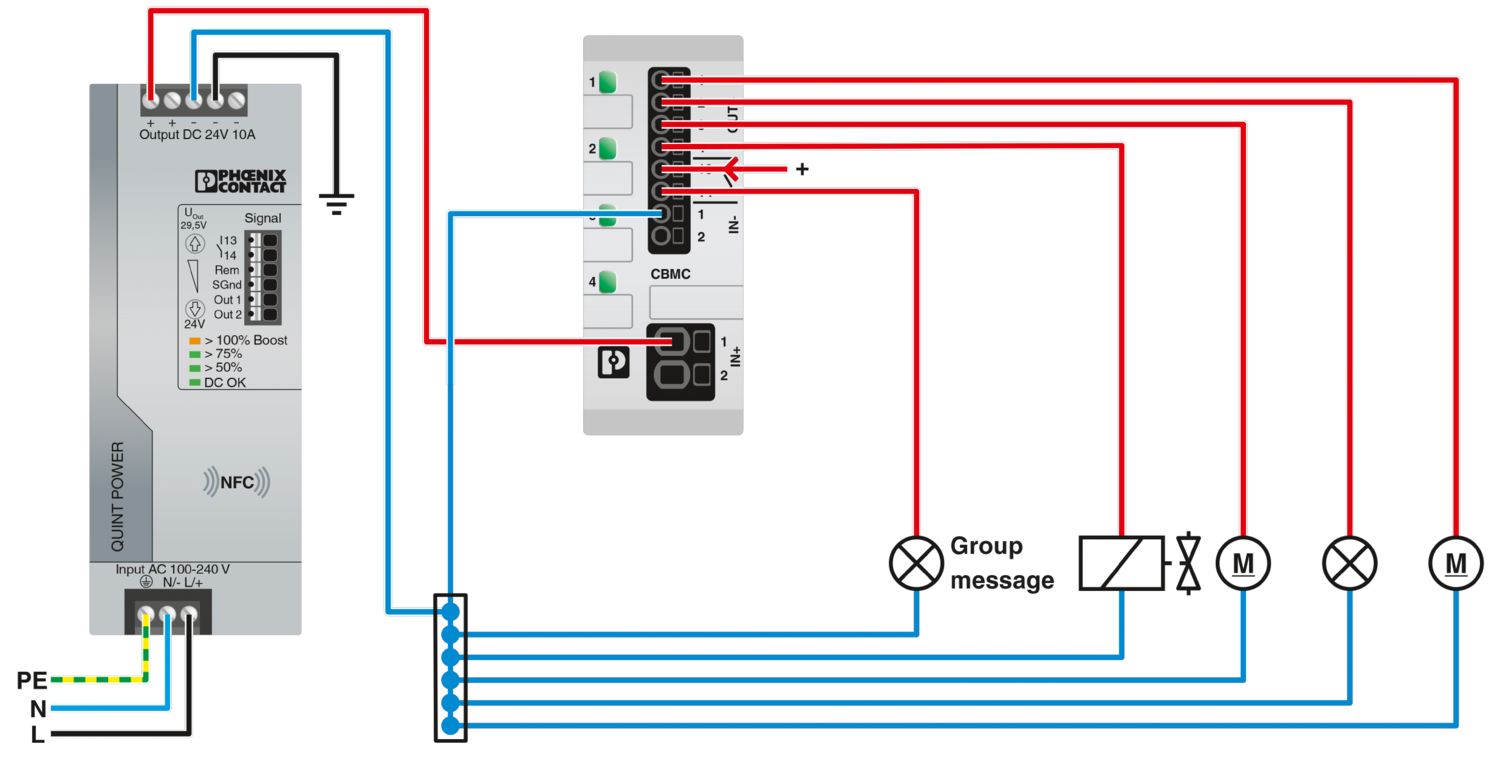
Le CBMC est équipé de blocs de jonction à raccordement Push-in. Il suffit d'enfoncer le conducteur à embout dans le bloc de jonction. Insérez un tournevis adapté dans l'orifice d'ouverture pour libérer le conducteur.
Les bornes IN+ et IN- servent ...
Voir plus
Le CBMC est équipé de blocs de jonction à raccordement Push-in. Il suffit d'enfoncer le conducteur à embout dans le bloc de jonction. Insérez un tournevis adapté dans l'orifice d'ouverture pour libérer le conducteur.
Les bornes IN+ et IN- servent à alimenter le CBMC, le bloc de jonction IN- est plus petit car il ne sert qu'à alimenter le CBMC, et les courants de charge ne doivent pas revenir via le CBMC. Cela permet de minimiser une éventuelle chute de tension sur la ligne. En revanche, la connexion IN+ doit conduire le courant total de tous les courants de charge suivants.
Quels sont les signaux disponibles sur le CBMC ?
Il existe différentes versions du CBMC, avec 13-14 contacts libres de potentiel ou avec une entrée de réinitialisation et une sortie d'état.
NO - contact à distance libre de potentiel 13-14
Cela indique l'état du système. En présence d'au ...
Voir plus
Il existe différentes versions du CBMC, avec 13-14 contacts libres de potentiel ou avec une entrée de réinitialisation et une sortie d'état.
NO - contact à distance libre de potentiel 13-14
Cela indique l'état du système. En présence d'au moins une coupure d'erreur, il émet un message.
fermé = absence d'erreur
ouvert = au moins une coupure d'erreur a lieu
S - sortie d'état
Signal collectif sans séparation de potentiel, cela indique l'état du CBMC. En présence d'au moins une coupure d'erreur, il émet un message.
High (24 V) = absence d'erreur
Low (0 V) = au moins une coupure d'erreur a lieu
Courant maximum 20 mA
RST - entrée de reset
Les canaux désactivés en raison d'une erreur sont réactivés par un front descendant.
Les sorties du CBMC répondent-elles aux exigences de la norme NEC Class 2 ?
Les disjoncteurs de puissance CBMC, réglables jusqu'à un courant maximal de 4 A, disposent de quatre sorties conformes à la classe 2 de la norme NEC. Cela signifie qu'ils fournissent une puissance maximale de 100 VA en sortie, satisfaisant ainsi aux ... Voir plus
Les disjoncteurs de puissance CBMC, réglables jusqu'à un courant maximal de 4 A, disposent de quatre sorties conformes à la classe 2 de la norme NEC. Cela signifie qu'ils fournissent une puissance maximale de 100 VA en sortie, satisfaisant ainsi aux exigences de la classe 2 de la norme NEC. Par conséquent, les câbles et appareils peuvent être utilisés sans homologation UL.
Voir moinsLe CBMC dispose-t-il d'une isolation galvanique ?
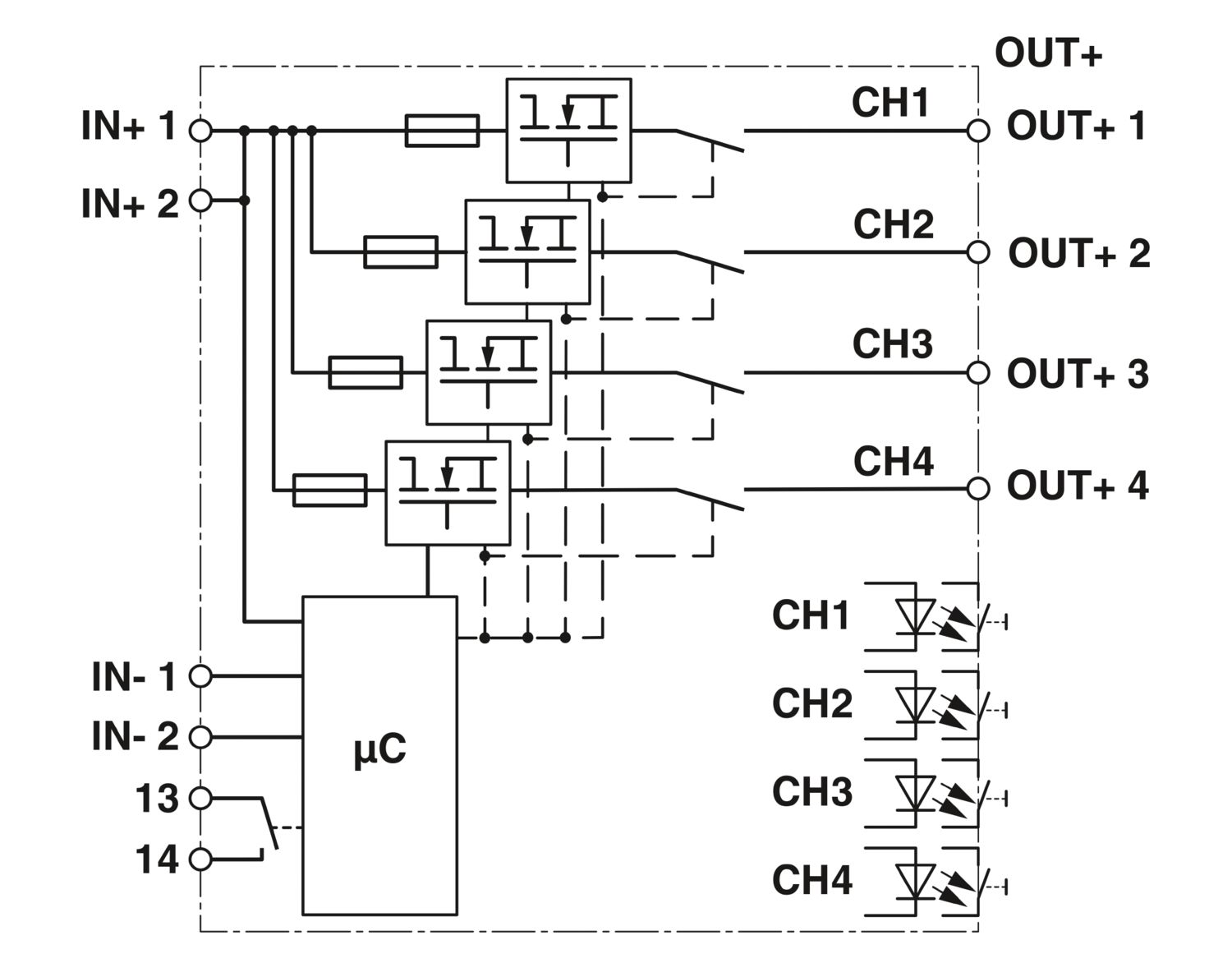
Le CBMC est également disponible dans une version à isolation galvanique. Dans ce cas, le circuit électrique est coupé par un MOSFET et en plus par un relais ; la sortie est alors libre de potentiel.
La désignation de cette variante commence comme suit :
CBMC EG4...