3D view
Experience now in 3D
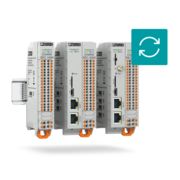
Take a look at the CHARX control modular 3150 AC charging controller in precise detail. The product can be viewed from any angle using free zoom and rotate functions.

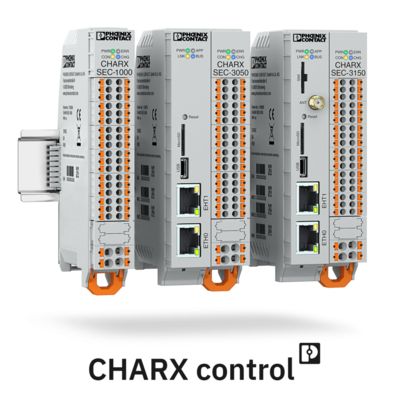
The scalable CHARX control modular mode 3 charging controllers are the centerpiece of a smart charging infrastructure. The open Linux platform enables sector coupling, customer-specific IoT applications, and smart services. Regular, free updates ensure cybersecurity and deliver new functions such as bidirectional charging and plug-and-charge. Simple implementation of calibration law and professional support services complete the offer.
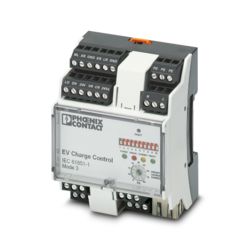
EV charge control is used to charge electrical vehicles on the 3-phase AC mains power supply according to IEC 61851-1 Mode 3. All necessary control functions are integrated. Additional functions are available for various charging applications.
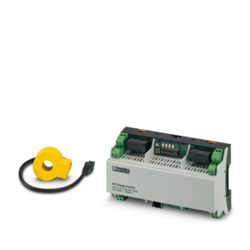
AC charging controller in accordance with IEC 61851-1, client or stand-alone, Modbus/TCP via Ethernet, connection for RFID reader and energy meter via RS-485, DC residual current monitoring, connector release in the event of power failure
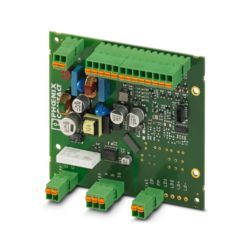
The EV-CC-AC1-M3-CC-SER-PCB-MSTB charging controller as a PCB for charging electric vehicles according to IEC 61851-1, Mode 3, optimized for charging stations with permanently mounted Vehicle Connector. Connection via PCB connector on header.
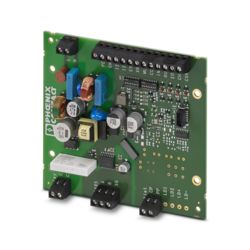
The EV-CC-AC1-M3-CC-SER-PCB charging controller as a PCB for charging electric vehicles on a 3-phase AC power grid according to IEC 61851-1, Mode 3. Optimized for charging stations with permanently mounted Vehicle Connector. All charging functions and comprehensive configuration settings are already integrated.
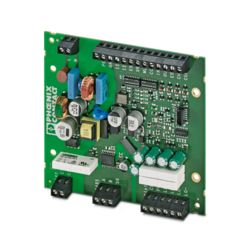
The EV-CC-AC1-M3-CBC-SER-PCB charging controller as PCB is used for charging electric vehicles at 3-phase AC networks according to IEC 61851-1, Mode 3. All charging functions, comprehensive configuration settings as well as a locking controller are already integrated.
The EV-CC-AC1-M3-CC-SER-PCB charging controller as a PCB for charging electric vehicles on a 3-phase AC power grid according to IEC 61851-1, Mode 3. Optimized for charging stations with permanently mounted Vehicle Connector. All charging functions and comprehensive configuration settings are already integrated.

Plug-and-charge
Simplified calibration law concept

Coupling various sectors and stakeholders such as power grids, buildings, local generators, charging stations, and electric vehicles together is becoming ever more important for the future of e-mobility.
Communication is therefore the key factor for a sustainable and integrated e-mobility infrastructure that is based on renewable energies. This includes, for example, the integration of electric vehicles into the smart grid or smart home, efficient and user-friendly business processes, and device and patch management for charging park operators.
All these services require secure communication based on various protocols. With the new generation of controllers CHARX control modular, its open Linux platform, and Phoenix Contact’s application expertise, you are ideally prepared for this challenge.

From first- to third-level support, you as the customer receive personal and rapid support from our trained experts:
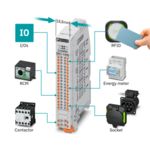 |
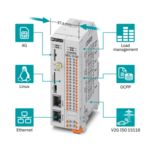 |
|
|---|---|---|
| The compact 1000 class | The smart 3000 class | |
| Width | 18.8 mm | 37.6 mm |
| Possible operating modes | Stand-alone, client | Stand-alone, client, server (for managing up to 48 charging points) |
| Interfaces for charging socket/charging cable, contactor, RFID reader, energy meter, residual current monitoring, release in the event of mains failure, configurable I/Os | ||
| Charging compliant with calibration laws with OCMF support ¹⁾ | ||
| Linux platform, web-based management, dynamic load management, Ethernet, USB-C, OCPP 1.6J, Modbus/TCP, MQTT, REST, OpenVPN | ||
| ISO 15118 for plug-and-charge and, in future, vehicle-to-grid (optional as item versions) | ||
| 4G/2G cellular communication (optional as item versions) | ||
| WLAN (can optionally be retrofitted via USB adapter) | ||
| View product details | View product list |
¹⁾ Only supported for class 1000 in combination with class 3000.
Take a look at the CHARX control modular 3150 AC charging controller in precise detail. The product can be viewed from any angle using free zoom and rotate functions.
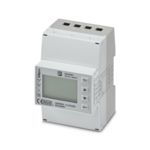 |
 |
 |
 |
|
|---|---|---|---|---|
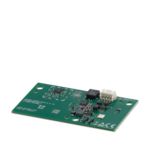
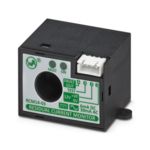
| Energy meters | RFID readers | Residual current monitoring | Power supply | |
| View product list | View product list | View product list | View product list |
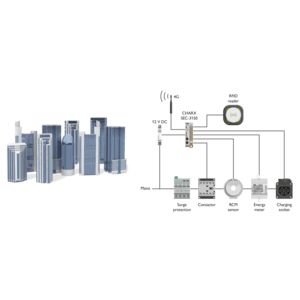
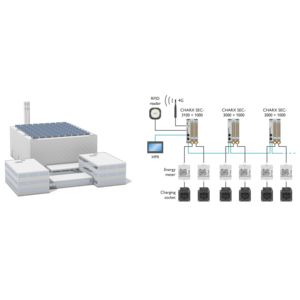
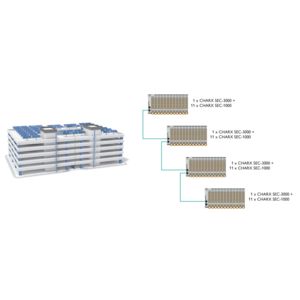

Which interfaces and protocols are supported?
CHARX control modular offers a variety of interfaces such as Ethernet, WLAN (via USB adapter), Modbus/TCP, OCPP 1.6J, MQTT, and REST-API. This allows the controller to be flexibly integrated into a wide range of backend systems, energy management systems, and IoT systems.
How easy is installation and commissioning?
With plug-and-play modules, Push-in connection technology, and web-based configuration, installation is particularly quick and easy. The WLAN function also enables wireless commissioning and maintenance – without the need for complex cabling.
How is compatibility with peripheral devices ensured?
The control unit supports numerous energy meters (MID, compliant with calibration laws) and other peripheral devices, such as RFID/NFC modules and DC residual current monitoring. The modular system architecture enables different components to be easily integrated and replaced.
What scaling options are there?
CHARX control modular can be used to intelligently control and manage up to 48 charging points. The system architecture is designed such that it can be extended flexibly – from a single EV charger right up to a large charging park.
How will international standards be complied with (also in the future)?
The controller complies with current standards such as IEC 61851, ISO 15118, and the Radio Equipment Directive (RED). It is also prepared for the Alternative Fuels Infrastructure Regulation (AFIR) and the Cyber Resilience Act (CRA). Regular, signed software updates ensure that new regulatory and technical requirements are implemented promptly.
Are there functions for smart services and IoT applications?
Yes, the open Linux platform enables the development and integration of customer-specific IoT applications, smart services, and sector coupling. This means that the charging infrastructure can be future-proofed and extended individually.
How is security guaranteed during updates and in operation?
Updates are secured by RSA-PSS signatures and SHA-512 Hash. The controller has role-based access control, a mandatory password change on first login and protection mechanisms against brute force attacks.
How does charging point management work?
A web-based management dashboard enables convenient configuration, monitoring, and maintenance of all charging points – locally or remotely. Status displays and error diagnostics are available at all times.
How is interoperability ensured?
By supporting open standards and protocols (OCPP, Modbus, MQTT, REST), the controller is compatible with a large number of (manufacturer-independent) backend systems, energy meters, and peripheral devices.
What special features does CHARX control modular offer?
Compared to other solutions, the combination of an open Linux platform, modular hardware, comprehensive protocol support, regular security updates, and simple scalability stands out and makes CHARX control modular a particularly flexible and future-proof solution for all AC charging applications.
How do I securely integrate charging points into IT and energy management systems?
Our AC charging controller supports numerous interfaces and protocols such as OCPP, MQTT, Modbus/TCP, and REST. This enables seamless integration into backend systems, smart home systems, and building management systems - including secure communication and optional VPN connection.
How is the charging infrastructure protected against cyber attacks?
The control system is developed in accordance with the secure-by-design principle: only necessary interfaces are active by default, passwords must be selected securely and all connections can be encrypted (e.g., via TLS or VPN). Security updates and logging of security-relevant events are a matter of course.
Can I safely monitor and maintain charging points remotely?
Yes; the integrated, encrypted OpenVPN solution ensures that protected remote access is possible. This is only activated when required (on demand) and protects your charging infrastructure from unauthorized access. This allows you to remotely carry out maintenance, diagnostics, and updates securely and efficiently.
How does load management work and how flexible is it?
The system distributes the available connected load intelligently and in phase to up to 48 charging points. It recognizes new vehicles, takes into account dynamic loads (e.g. PV systems and other loads) and automatically shifts unused capacities. This means that every charging process is optimally controlled and the grid connection point is reliably protected.
How do charging points stay technically and regulatory up-to-date?
Regular software updates ensure that new functions, safety standards, and legal requirements (such as ISO 15118, AFIR, calibration law) are implemented promptly – without losing certification.
What customization options are there?
The controller features flexible function blocks (e.g., event actions), which allow the operating logic and design to be customized.