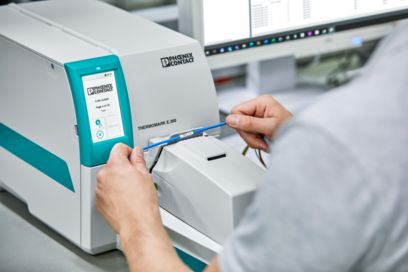
Identifying and eliminating efficiency gremlins in control cabinet building


Have efficiency gremlins long since become the norm in your everyday life, too?
Monday morning in control cabinet building. The order seems clear enough, and yet the process grinds to a halt because tools are missing, materials are not on hand, and the information doesn’t add up. Instead of clear processes, there are delays, coordination work is necessary, and improvised solutions are created.
These are just minor interruptions that no one really questions. But that is precisely the problem. After all, although individual issues may go unnoticed, they add up over the course of the day, the order, and the entire production process: time spent searching, making unnecessary trips, duplicating steps, and unclear information put the brakes on value creation. We call these silent losses efficiency gremlins. The tricky thing is that most of the efficiency gremlins are invisible and have long since become part of daily activities. But anyone who can identify them can address them – often with just small targeted changes and appropriate solutions.
Typical efficiency gremlins in control cabinet building

When trips cost time Efficiency gremlins surrounded by walking distances, reach distances, and time spent searching for materials
The component is not where it should be, and the tool needed is missing or is at the other end of the workshop. This means walking, handling, and searching. And not just once a day. A total of 82% of companies carry out workshop assembly work. At the same time, 64% of control cabinet builders do not use lean methods. The consequences overall include excessively long search times, unnecessary trips, interrupted workflows, and a lack of focus on the actual work. What seems to take just a few seconds slowly adds up over the course of the day to real losses in efficiency due to many small, avoidable trips and unstructured material provision.

When information slows things down Efficiency gremlins surrounded by paper, data chaos, and media discontinuities
Missing data, outdated information, manual data maintenance, and hardcopy documentation: Instead of working, employees spend their time searching, cross-checking, and asking for clarification. An incredible 88% of control cabinet builders still use paper in their manufacturing processes; just 12% operate entirely digitally. At the same time, 88% of companies receive customer data in PDF format, with real engineering data being the exception. This results in media discontinuities, duplicate upkeep work, version chaos, and wasted time due to missing, unclear, and scattered information.

When manual steps become a source of error Efficiency gremlins: laborious work, subprocesses, and loss of precision
In control cabinet building, manual tasks ranging from assembling components on DIN rails, through conductor assembly, right through to wiring are a feature of the daily routine. A total of 86% of German control cabinet builders operate with a low level of automation, and just 14% use assistance systems. What appear to be routine tasks add up to significant time losses in the daily workflow. At the same time, repetitive tasks lead to an increased likelihood of errors and inconsistent quality. A large number of discrepancies go unnoticed, but they often lead to time-consuming and costly rework.

Our solutions for combatting efficiency gremlins
Many efficiency gremlins can be eliminated more quickly than you might think. With clear structures, well-considered workstations, and the right flow of information. This product selection highlights specific ways to eliminate efficiency gremlins in practice.




Workstations that frustrate efficiency gremlins Structured, ergonomic, efficient

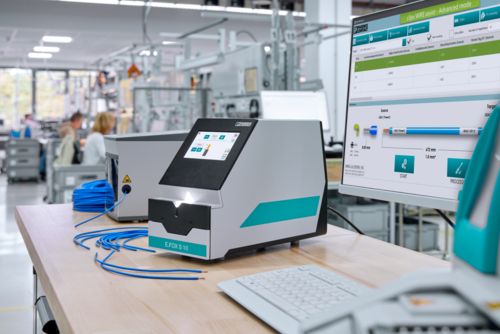

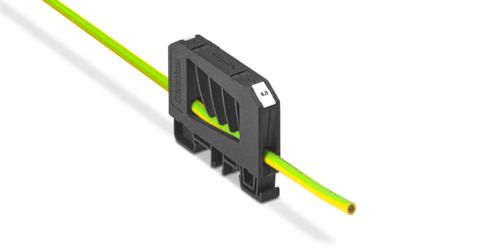
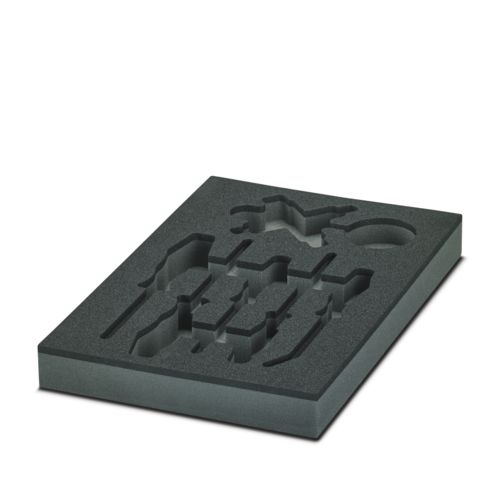

Working together to combat efficiency gremlins

Process consulting in control cabinet building
In everyday life, efficiency gremlins creep in everywhere and often become a habit. Even though they may seem small at first glance, they add up to significant losses. This is exactly where our process consulting comes in. Together, we will identify both the obvious and hidden inefficiencies at your workplace. We don't just look at individual work steps, but at the interplay between employees, materials, and information. Building on this, we work with you to develop customized solutions that are tailored to your production needs. The key point here is that even small changes can lead to significant efficiency gains. And this is why we optimize your processes step by step – working together, with a practical approach, and in a way that can be implemented immediately.