
What is decarbonization? Decarbonization refers to the process of reducing or eliminating carbon emissions, primarily through the use of low-carbon or renewable energy sources.

Brief summary
Decarbonization is a term that is becoming increasingly important in the debate on global climate change and the need for a sustainable energy future. It refers to the process of reducing or eliminating carbon emissions, mainly through the use of low-carbon or renewable energy sources.
But why is decarbonization so crucial for our future? In this article, you will learn more about the basics on, the importance of, and the ways in which decarbonization contributes to a climate-neutral world.

Reduction of carbon emissions
To curb global warming, the main driver for decarbonization is the need to drastically reduce carbon emissions. The use of fossil fuels to generate energy is the largest emitter of greenhouse gases that lead to global warming.
A switch to renewable energy from sources such as wind, solar, and geothermal, plays a central role in achieving climate targets, including the Paris Climate Agreement, which aims to limit global warming to 1.5°C.
Economic advantages
Decarbonization brings about not only ecological but also economic benefits. By using renewable energies, countries can reduce their dependence on imported fossil fuels and lower their energy costs in the long term. Companies can increase their competitiveness and productivity and benefit, for example, through the reduction of operating costs. In addition, the transition to a green economy will create jobs in new sectors and can transform entire industries sustainably.

Health benefits
Fossil fuels cause particulate matter, nitrogen oxides, and sulfur dioxide. These pollutants are associated with respiratory diseases and cardiovascular problems. A reduction in emissions leads to an improvement in air quality and therefore also has health benefits: Less pollution leads to fewer health problems associated with air pollution.
How does decarbonization work?
Renewable energies
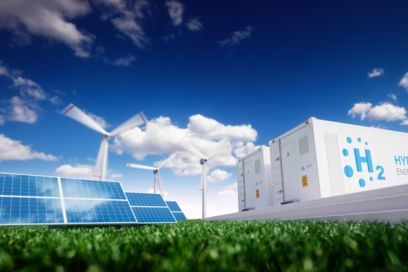
The most important step towards decarbonization is the switch from fossil fuels to renewable sources. Significant progress has been made in solar and wind power technologies and cost-effective solutions are now available. They are available in unlimited quantities and do not cause any carbon to be emitted during power generation.
Energy efficiency
Another crucial aspect of decarbonization is the improvement of energy efficiency. The energy-efficient refurbishment of buildings, efficient transportation systems, and efficient industrial processes can significantly reduce our energy consumption and thus improve our carbon footprint.
Electrification
The electrification of transport, industrial processes, and households is another way to achieve decarbonization. Electric vehicles, for example, reduce emissions in transportation, especially if the electricity used comes from renewable sources. Comprehensive electrification is helping to displace fossil fuels in these sectors.
Decarbonization in practice
Countries such as Sweden and Norway have managed to cover a large part of their energy requirements from renewable sources. Sweden already obtains more than half of its energy consumption from renewable sources. Such successes are the result of long-term political measures and investments in sustainable technologies.
Implementation challenges
Although the objective is clear and the technologies to reduce a large proportion of emissions are already available, implementation poses challenges. Technological barriers, economic costs, and political resistance are obstacles that need to be overcome. Another factor is the environmentally friendly disposal or recycling of old energy systems.
Future steps towards decarbonization
Long-term strategies are required to achieve a climate-neutral economy. To fulfill the Paris Agreement, both public and private sectors must work together to develop innovative solutions. Continuous investment in research and development as well as international cooperation is required.
Legal requirements and subsidies
Governments around the world are beginning to integrate decarbonization strategies into their environmental policies. There are legal requirements and subsidies that motivate companies to reduce their carbon emissions. Tax incentives for the use of renewable energies and energy-efficient technologies also play a role.

Innovation and technological development
In the course of decarbonization, new technologies, such as the use of green hydrogen and the development of carbon capture and storage (CCS) technologies, are also gaining in importance. In future, these innovations can make a decisive contribution to reducing emissions that are difficult to cut.
Summary
Decarbonization is not just a buzzword, but a necessary goal for a sustainable future. By switching to renewable energies and increasing efficiency, we can counteract the negative effects of climate change and preserve an environment worth living in for future generations.
However, the challenge lies in consistent implementation and the willingness to actively shape change. Only through a joint global effort can we successfully drive forward decarbonization and create a climate-friendly world.
Connect with our experts



More posts

What is electrification?
Electrification enables processes to be made more efficient, emissions to be reduced, and innovative technologies to be driven forward.

What are smart grids?
A smart grid is a power grid that uses digital communication technologies to optimize the generation, distribution, and consumption of electricity.

The All Electric Society Factory
Production in the All Electric Society Factory by Phoenix Contact can be energy-positive thanks to a sophisticated DC power grid. A look behind the scenes reveals how this works.