
Electromechanical engineering for railway infrastructure
More information on splice boxes, robust marking, electronics housings, and system cabling for signal technology can be found below. Our railway experts will be happy to advise you.
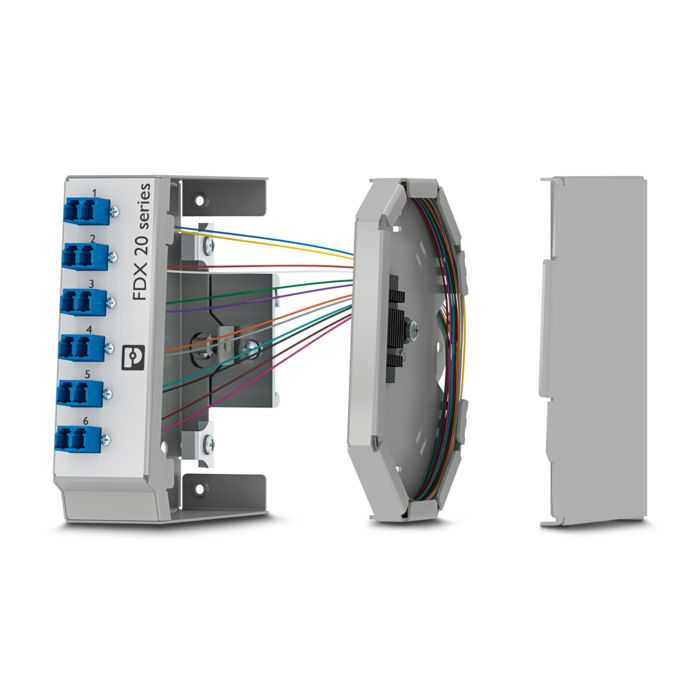
High-speed, future-proof data transmission
Splice boxes are transfer and distribution points between field levels (fiber-optic cables) and the active components of the communication infrastructure (switches). Our splice boxes provide plenty of space for the secure connection of fiber-optic cables and, at the same time, have compact outer dimensions. They can be used at temperatures from -25°C to +70°C, and selected versions can even be used between -40°C and +85°C. Because they feature different fiber and connector types and up to 12 duplex front connections, our splice boxes are flexible and future-proof.
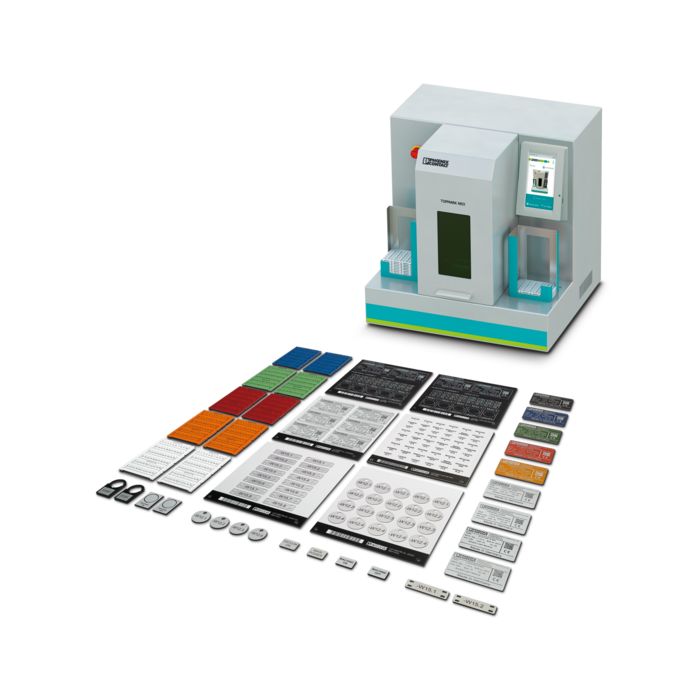
Robust marking for outdoor systems
Stainless steel signs are ideal for outdoor marking. They withstand even extreme weather conditions for decades. You can use our TOPMARK NEO to mark stainless steel materials. It processes 650 marking materials such as stainless steel, aluminum, ABS, polyacrylic, and polycarbonate.
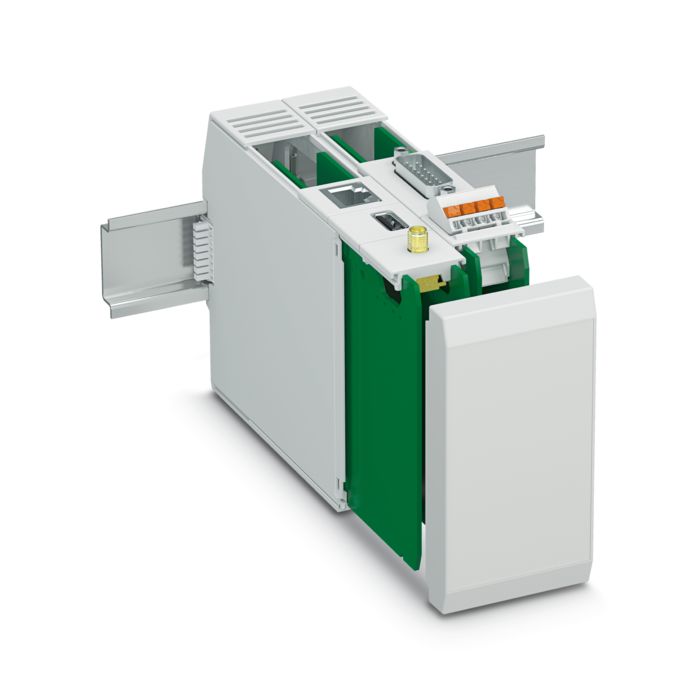
Electronics housings for conversion and modernization
To be able to continue using the equipment that already exists in the railway infrastructure or to add new interfaces to it, it may be necessary to integrate it into a modern housing or retrofit it with a pluggable device connection. Use our wide range of standard electronics housings to do so.
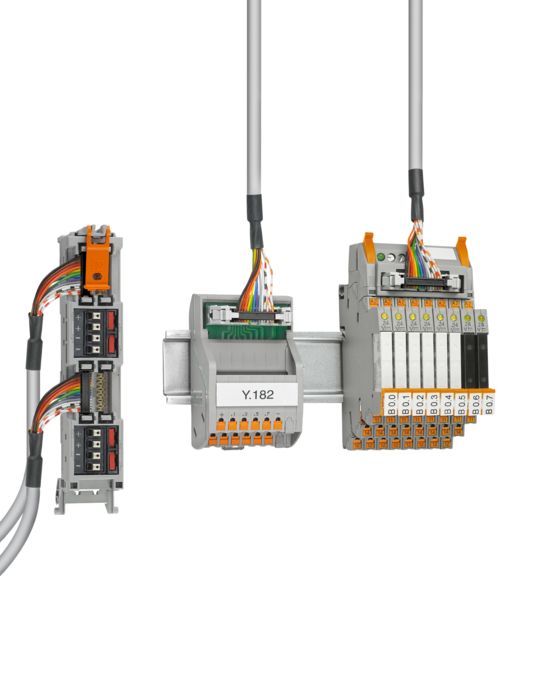
VARIOFACE system cabling
When it is based on pre-assembled system cables such as our VARIOFACE system cabling, quick, uniform wiring without errors is possible every time. VARIOFACE is a wiring concept that was specially developed for coupling to I/O modules. It integrates a front adapter, system cables, and modules into different functions such as relay, solid-state relay, and feed-through connectors.
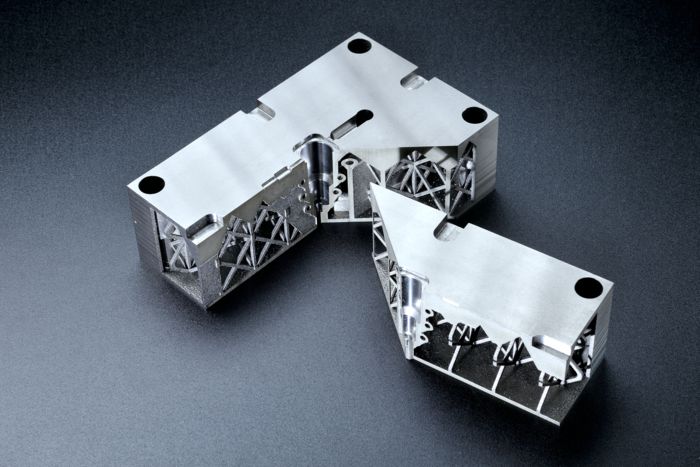
3D printing – additive manufacture of special or replacement parts
In additive manufacturing, 3D components are “printed” layer by layer from a formless starting material. With the development of versatile new materials and constant optimization of the manufacturing process, new areas of application are constantly opening up for additive manufacturing – the railway industry is one of them. There, 3D printing is primarily significant for retrofitting old systems. Not least because various metals and plastics can be used to produce replacement parts in batches of 1.

Customized connection technology and sensors – tailored precisely to your application
Tailor-made solutions for your application: Pulsotronic, a Phoenix Contact Group company, works with you to develop and produce sensors and electronic components that are tailored precisely to your requirements – fast, flexible, and practical. Our products are designed for use in harsh environments and deliver compelling solutions in mobile machinery, renewable energies, machine building, intralogistics, and utility vehicles. The portfolio is complemented by high-quality connection technology and accessories for industrial use.