
ATP-PTCB BE
-
Placa separadora
1683464
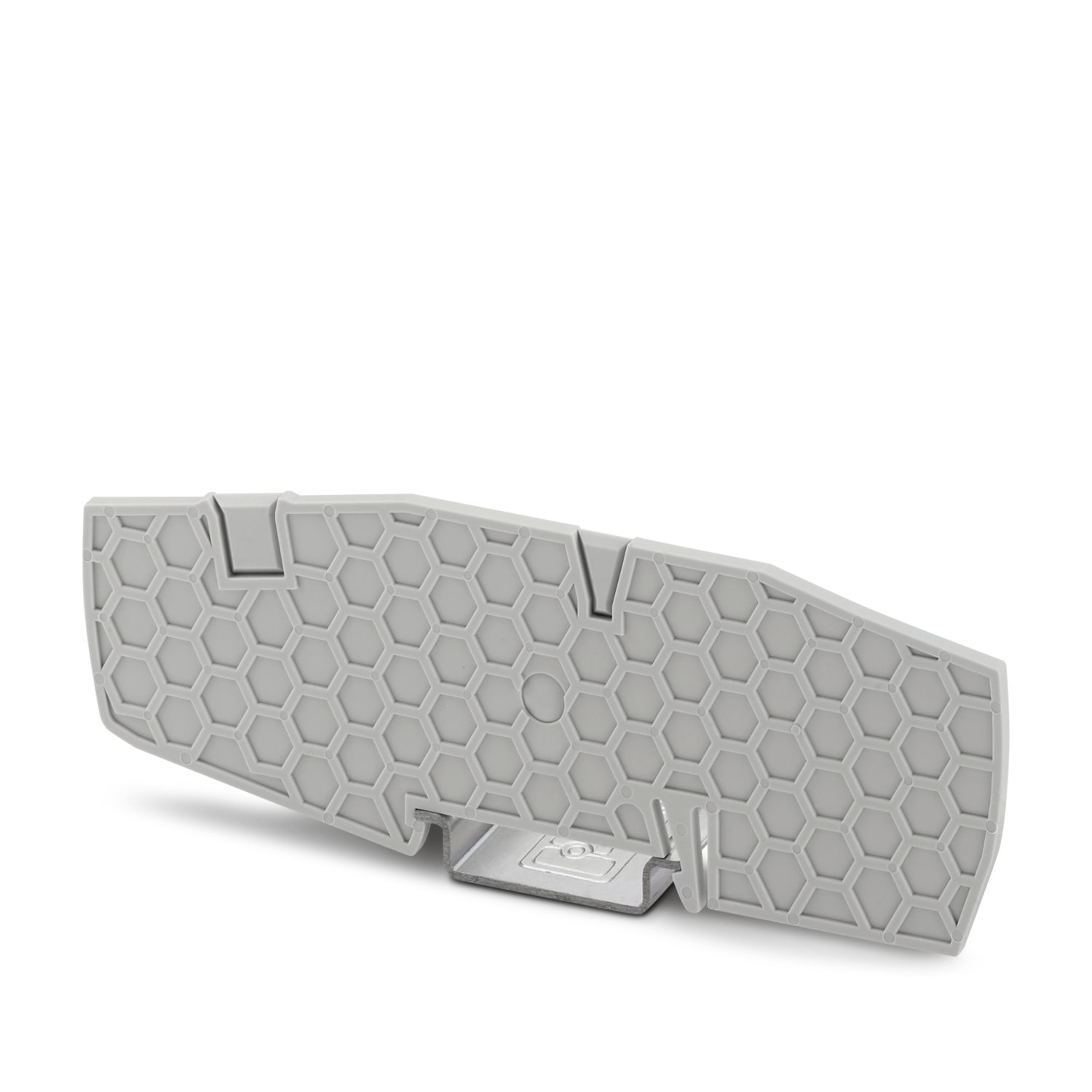

Placa separadora, clase de montaje: Carril: TH 35 - 7,5 mm
Detalles de producto
| Tipo de producto | Placa separadora |
| Esquema de dimensiones |
|
| Anchura | 2,2 mm |
| Altura | 122,9 mm |
| Profundidad | 44,4 mm (Con carril de 7,5 mm) |
| Color | gris (RAL 7042) |
| Clase de inflamabilidad según UL 94 | V-0 |
| Condiciones ambientales | |
| Temperatura ambiente (servicio) | -30 °C ... 60 °C |
| Temperatura ambiente (almacenamiento / transporte) | -40 °C ... 80 °C |
| Tipo de montaje | Carril: TH 35 - 7,5 mm |
Productos compatibles
Preguntas frecuentes
¿Cómo funciona la alimentación y cómo se hace el puenteado?
En el punto de embornaje superior pueden suministrarse corrientes de hasta 40 A. Es posible conectar conductores flexibles de hasta 6 mm2 o rígidos de hasta 10 mm2. La corriente alimentada puede distribuirse con puentes FBS ...-... Ver más
En el punto de embornaje superior pueden suministrarse corrientes de hasta 40 A. Es posible conectar conductores flexibles de hasta 6 mm2 o rígidos de hasta 10 mm2. La corriente alimentada puede distribuirse con puentes FBS ...-8 a través de los fosos de puenteado dispuestos en la parte superior. Es válido lo siguiente: las corrientes superiores a 31 A deben distribuirse a través de dos puentes; las corrientes hasta 31 A pueden distribuirse a través de un puente.
Ver menos¿Qué curvas características elijo y cuándo?
Hay disponibles dos curvas características diferentes:
- La curva característica F2, más rápida, es adecuada para cargas más sensibles, como sensores o cargas resistivas. Se dispara con tensiones DC en el rango de 4 ... 8 x In.
- La curva carac...
Ver más
Hay disponibles dos curvas características diferentes:
- La curva característica F2, más rápida, es adecuada para cargas más sensibles, como sensores o cargas resistivas. Se dispara con tensiones DC en el rango de 4 ... 8 x In.
- La curva característica de retardo medio M1 se recomienda para cargas o motores que consuman más corriente (por ejemplo, capacitivos). Se dispara a tensiones DC de 8 ... 15 x In.
¿Hay algún requisito para la alimentación eléctrica? ¿Qué se debe que tener en cuenta para un correcto dimensionamiento?
Para una protección selectiva, la alimentación eléctrica debe ser capaz de suministrar el aumento de corriente de disparo necesario. También se deben tener en cuenta las impedancias de la línea.
¿Qué se entiende por capacidad de desconexión en caso de cortocircuito y cuál es la diferencia entre los términos Icn e Inc?
Capacidad de desconexión en caso de cortocircuito: corriente de cortocircuito máxima que el interruptor de protección puede desconectar de forma segura. ¿Qué debe tenerse en cuenta si la corriente de la fuente es superior a la capacidad de desconexió... Ver más
Capacidad de desconexión en caso de cortocircuito: corriente de cortocircuito máxima que el interruptor de protección puede desconectar de forma segura. ¿Qué debe tenerse en cuenta si la corriente de la fuente es superior a la capacidad de desconexión en caso de cortocircuito? En este caso, el interruptor de protección puede utilizarse con un fusible de seguridad hasta Inc. Algunos fusibles han sido probados y homologados para este fin (véase el certificado).
- Icn (capacidad nominal de desconexión en caso de cortocircuito): valor que el interruptor de protección puede desconectar por sí solo sin fusible de seguridad.
- Inc (corriente de cortocircuito condicionada): valor que puede soportar el interruptor de protección con un fusible conectado antes de él.
¿Se puede utilizar el PTCB TM para AC y DC?
Sí, para AC debe tenerse en cuenta la corriente de cortocircuito no afectada en el lugar de instalación previsto. Esta no debe superar la capacidad de desconexión del PTCB TM. El disparo magnético para AC y DC difiere en el factor DC/AC = 1,3.