


Increased efficiency: Digitalization optimizes and automates production processes, resulting in higher efficiency and lower operating costs.
Sustainability: The All Electric Society promotes the use of renewable energies and reduces carbon emissions, thus supporting the sustainability of production processes.
Quality control: Digital technologies enable more precise monitoring and control of production processes, thereby improving product quality.
Flexibility: Networking and automation enable production lines to be quickly adapted to new products and changing market requirements.
Digital Factory: The future begins today
Create real value from data For the greater efficiency, resilience, safety, and security of your system
Make the transition from being the owner to the manager of your data. With Digital Factory now solutions, you will not only improve the efficiency of your system, but also increase productivity and availability at the same time – step by step. Our solutions for cybersecurity and the safety of machinery ensure greater resilience, stability, and compliance with current legal directives.
Success stories from customer projects
Use data to optimize the consumption of energy and resources Create transparency. Increase efficiency. Measurably reduce carbon emissions.
These references illustrate how you can use consumption data to identify targeted measures for greater efficiency, reduced resource use, and a sustainable reduction in the carbon footprint of entire systems.
Prevent system downtime before it occurs Detect anomalies at an early stage. Manage maintenance effectively. Ensure availability.
From reactive to proactive: These references illustrate how our AI-based machine learning analytics can help you prevent downtime, streamline maintenance processes, and sustainably increase the availability of your critical infrastructure.
Digitalize existing systems without jeopardizing critical processes Retrofit without interruption. Connect IT and OT. Network data securely.
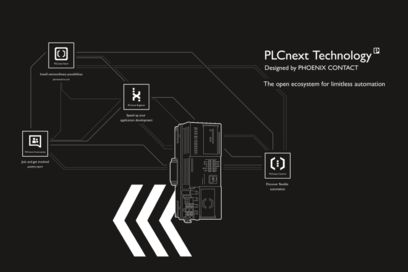
Digitalization doesn’t have to start from scratch, thanks to our solutions for brownfield digitalization and IT/OT integration. These references illustrate how existing production environments are networked, analyzed, and optimized step by step. Use our open PLCnext Technology Ecosystem to automate processes in a scalable, safe, and secure manner in accordance with the current directives for cybersecurity and the safety of machinery.
Practical example: Achieving sustainability goals in the food industry through digitalization
With Digital Factory now, we provide you with tailor-made solutions for the food industry to improve the sustainability, productivity, and safety of your systems:
IIOT portfolio:
- Real-time monitoring: Continuous data acquisition and analysis of sensors and actuators and for early detection of deviations.
- Digital twins: Virtual representations of production systems simplify planning and optimization.
-__ Integration and networking with the IIOT framework:__ Seamless integration of various systems and devices for improved data processing and analysis.
Machine learning and signal technology: - Predictive maintenance: Predicting maintenance requirements to avoid unplanned downtime.
- Anomaly detection: Early detection of unusual patterns in production data with machine learning.
Measuring technology: - Precise measurements: High-precision devices for precise monitoring of production parameters to increase quality and efficiency.
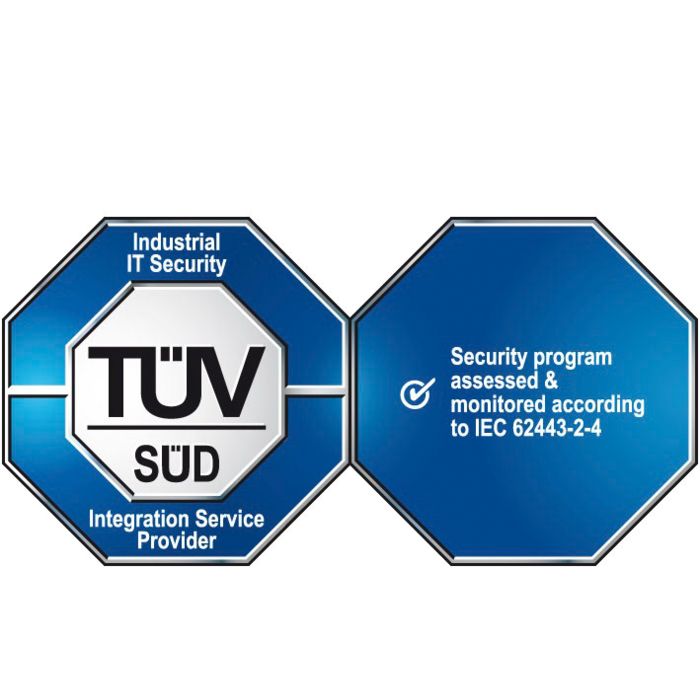
IEC 62443 certification is of great importance for the food industry, as it is considered a critical manufacturing sector. With our IEC 62443-certified components, we help you comply with current security standards:
- Cybersecurity: This standard ensures the protection of industrial automation and control systems (IACS) against cyberattacks.
- Risk minimization: Certifications help identify and eliminate vulnerabilities, thereby reducing the risk of production downtime and security incidents.
- Compliance and trust: Adhering to international security standards strengthens the trust of customers and partners and offers a competitive advantage.
- Holistic approach: The standard covers the entire lifecycle of components and systems, from development and operation through to decommissioning.
Practical example: Reducing emissions in thermal processing technology
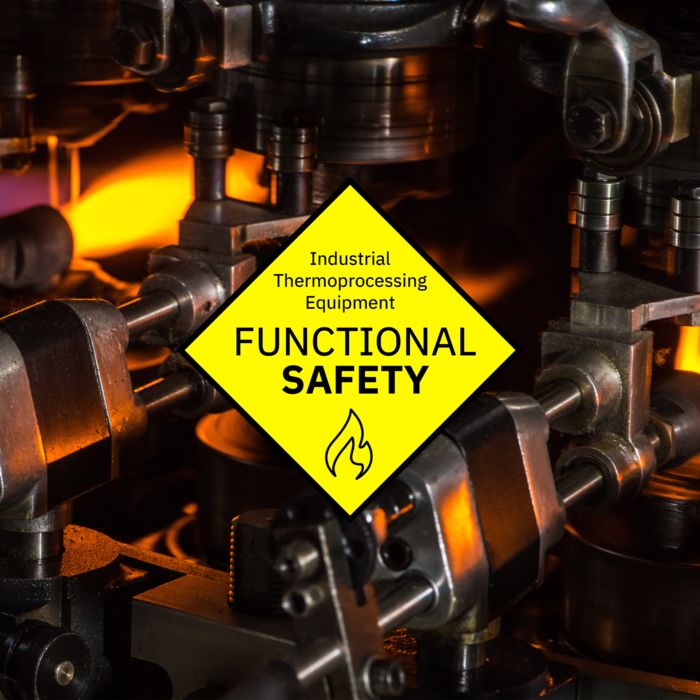
Energy-intensive industries, such as the steel, glass, and ceramics industries, face the challenge of converting their existing thermal processes along the entire production chain to low-carbon or zero-carbon methods of operation. This requires minimally invasive, open technologies that create sustainable infrastructures while ensuring functional safety. At the same time, certified, open digitalization and automation platforms must be available for security. For the energy transition to succeed, thermal systems must be designed so that they can be powered by electricity from renewable energy sources or other future low-carbon energy sources. In order to improve efficiency and environmental protection, our solutions help to reduce emissions in thermal processing technology.
- Retrofits and the effective integration of sensors for fuel and exhaust gas analysis as well as new sensor generations are scalable regardless of the communication protocol
- The functional safety of the furnace, melting tank, or boiler goes hand in hand with cybersecurity in accordance with the requirements of IEC 62443 or NIS 2.0
- The operator can introduce machine learning (ML) and industrial IoT (IIoT) for condition-based monitoring and process optimization in their systems – both off-premises and, in particular, on-premises
- Agility can be increased through low- or no-code applications that enable simple, individual, and scalable adaptation to changing fuel lines by using uniform parameterization platforms such as the open source tool Grafana
Early detection of unusual behavior patterns can prevent faults and changes in combustion processes. This includes gas fluctuations, load curve adjustments, and effective control of actuators and dampers. PLCnext Technology, including the MLnext software solution, is used for this purpose. The predictive approach also offers other potential economic and sustainability benefits:
- Higher overall equipment effectiveness (OEE) in thermal process machines – such as an IS machine in the glass industry – and thus a significant reduction in rejects
- Effective and intelligent control of fuel-air ratios and electric heating systems by eliminating the need for expensive external hardware such as automatic devices, leak detection systems, or temperature controllers
- Factory-wide intelligent and condition-based monitoring of the process, including safety-related sensors for measuring emissions, furnace, chimney draft, and hearth pressure, classic safety of machinery, and various temperature and pressure values
FAQs from machine builders and systems manufacturers
PLCnext Technology enables the integration of real-time-capable controllers and the use of high-level languages such as C/C++ and MATLAB® Simulink®. This enables flexible and high-performance automation.
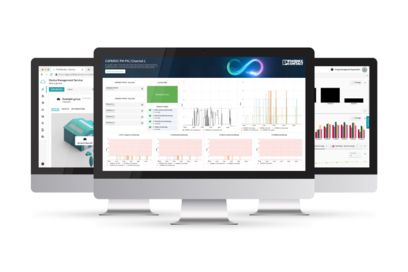
Proficloud.io provides smart services such as the Device Management Service and the Impulse Analytics Service, which enable predictive maintenance and monitoring.
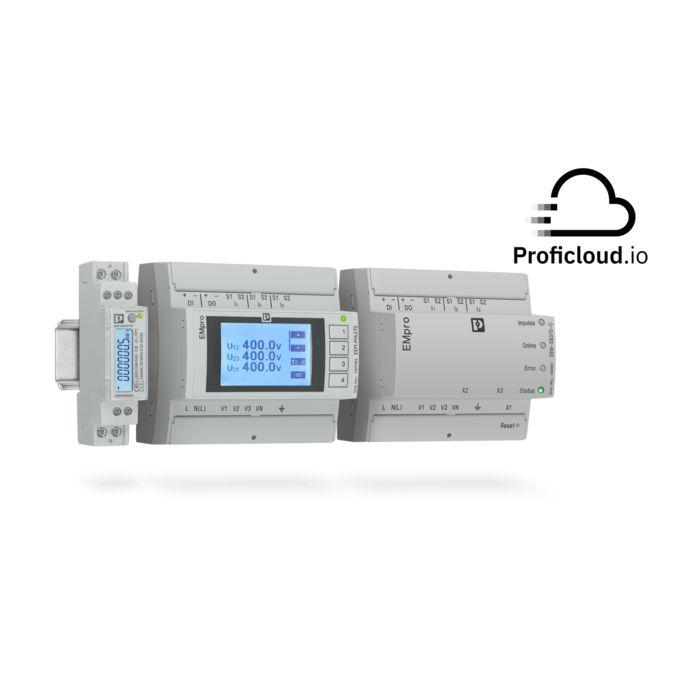
EMpro energy measuring devices record and analyze energy data to optimize energy consumption and are already integrated into the IIoT framework predefined without generating any additional data silos. They can also be linked there to all other media (utilities).
FAQs from manufacturers
MLnext features intelligent data analysis and enables the optimization of processes through machine learning. MLnext as an app via the PLCnext Store.
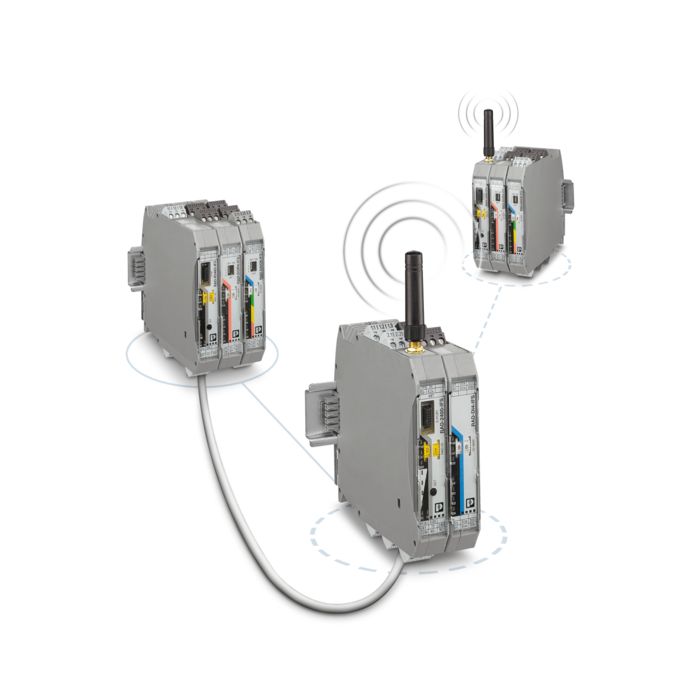
Radioline enables the wireless transmission of I/O signals and serial data over long distances, which is particularly useful in large-scale systems.
Proficloud.io enables the aggregation of real-time data and the development of new business models such as “Products-as-a-Service”.