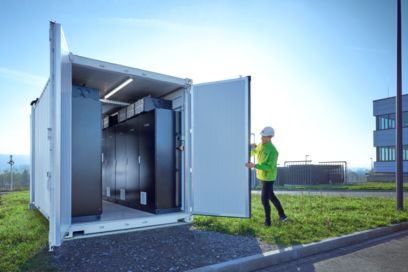
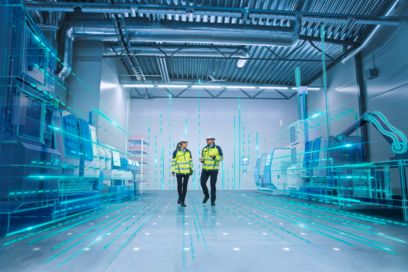
DC grids for charging infrastructure: DC charging efficiently implemented DC grids are the ideal basis for efficient DC charging. The direct integration of DC fast charging stations and bidirectional charging reduces conversion losses and actively integrates vehicle batteries as energy storage devices into the energy management systems of industrial buildings.


The challenge Increasing charging powers require new grid architectures
The expansion of charging infrastructure and its integration into industrial and commercial buildings brings new challenges. DC charging stations require high electrical powers, and making these powers available via the AC grid requires additional conversions. This increases technical complexity and leads to energy losses in the form of increased heat generation and higher operating costs.
With the increasing use of electric utility vehicles, the need for short charging times and high availability is growing. Bidirectional charging is also becoming increasingly important.
Vehicle batteries offer great potential as flexible energy storage systems, can help to reduce peak loads, and can efficiently store surplus energy when building energy demand is low. However, they can only be integrated into conventional AC power grids with considerable effort. Without consistent DC architecture, the efficiency potential is lost due to additional conversion losses and limited energy management concepts.

The solution DC charging and bidirectional charging directly in the DC grid
Industrial DC grids enable end-to-end direct current coupling, from the power generator through to the DC charging station. DC charging eliminates the need for double conversions between AC and DC, because the charging infrastructure is supplied directly from the DC grid. This increases energy efficiency, reduces losses, and enables high charging powers.
Bidirectional charging in the DC grid is particularly forward thinking. With this approach, electric vehicles can not only take in energy, but also feed it back into the DC grid. Vehicle batteries are thus becoming active energy storage systems that absorb peak loads, buffer renewable energies, and increase the security of supply for industrial buildings.

DC charging at Phoenix Contact DC charging infrastructure efficiently implemented
Phoenix Contact realizes DC charging solutions based on industrial DC grids with a consistent system architecture. The public AC grid is converted centrally into a 650 V DC grid, to which DC fast charging stations are connected directly. Photovoltaic systems and battery storage systems also feed directly into the DC grid and supply the charging infrastructure without the need for a detour via an AC power grid.
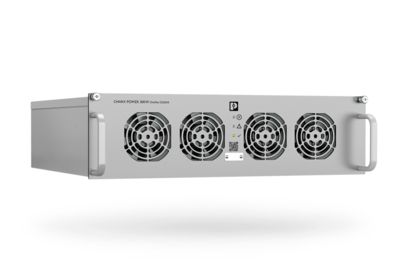
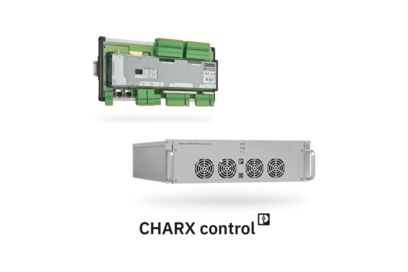
Efficient power electronics, protection technology, and connection technology as well as intelligent controllers are used for bidirectional charging. In combination with a higher-level energy management system, charging processes, the feedback of energy from vehicle batteries, and the building supply can be perfectly coordinated. This creates an efficient, scalable, and future-proof DC charging infrastructure.
Advantages Why DC charging in the DC grid is worthwhile
- Higher efficiency during DC charging through the reduction of conversion losses
- Bidirectional charging integrates vehicle batteries as energy storage devices
- Efficient, centrally controlled power distribution for high availability
- Future-proof charging infrastructure for industry and commerce


Contact
We would be happy to help you with solutions for DC charging in the DC grid