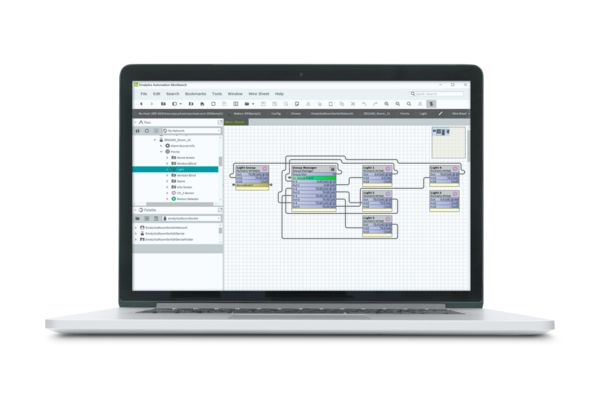



Niagara engineering tools and libraries extend the Niagara Framework with standardized function blocks and tools for more efficient engineering. Instead of recreating functions, data structures, and workflows from scratch for every project, you work with reusable libraries and a standardized system for room and HVAC automation. This allows projects to be implemented more consistently, reduces engineering effort, and enables recurring tasks to be completed much more quickly.
Engineering for Niagara – standardized, scalable, efficient Reduce engineering effort and complete building projects faster – with free Niagara libraries and tools for room and HVAC automation.
A system for efficient Niagara engineering
In building automation with Niagara, traditional approaches to engineering quickly reach their limits:
Custom programming, varying project structures, and manual processing of large amounts of data result in significant effort, a high risk of errors, and lengthy commissioning times.
Emalytics is designed for Niagara system integrators who want to specifically address these challenges. Instead of developing logic from scratch for every project, you’ll work with reusable function blocks and clear structures for room and HVAC automation.
These can be easily parameterized, combined, and used across projects.
This results in less engineering effort, consistent project structures, and significantly faster implementation – from individual systems to multi-site projects.
At the same time, you’ll remain in your familiar surroundings:
All libraries and engineering tools are seamlessly integrated into Niagara and can be used directly in existing projects.
emalyticsHVAC for scalable HVAC engineering
emalyticsHVAC transforms complex systems into a clear, modular structure for HVAC engineering. You work with standardized function blocks for devices, control systems, and operating and alarm states – rather than programming each system’s logic individually.
This ensures that even complex relationships remain transparent, understandable, and maintainable. At the same time, the logic is designed to work in conjunction with concepts of space, time, and energy. This creates a unified automation architecture for building automation using Niagara.
From individual ventilation and air conditioning systems to multi-site projects: emalyticsHVAC provides the foundation for standardized, scalable, and reusable system structures.
emalyticsRoom for standardized room automation
emalyticsRoom brings structure to the particularly complex level of building automation, namely rooms. You work with a unified logic for room automation in the areas of lighting, shading, temperature, and air.
Instead of developing custom solutions for each room, you simply customize proven function blocks using parameters. This reduces the engineering effort, simplifies testing, and ensures consistent behavior across all rooms.
Whether it’s an office, hotel, school, or function room, with emalyticsRoom, you can create a structure once and apply it to as many rooms as you like. This makes room automation with Niagara plannable, reusable, and scalable.
Niagara engineering tools for efficient bulk processing
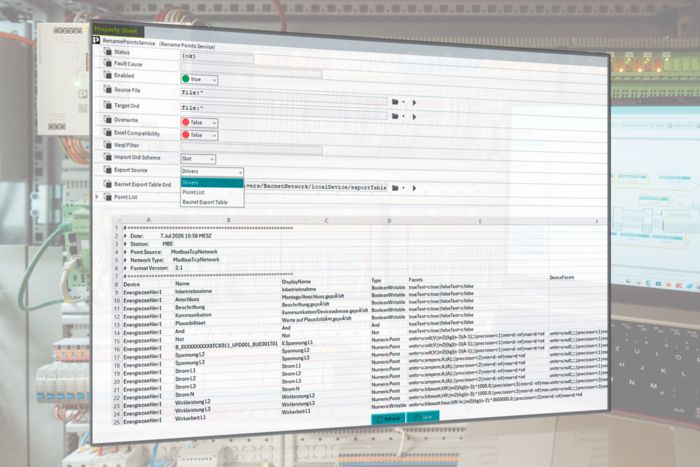
The key difference lies in the engineering process: emalyticsHVAC includes integrated Niagara engineering tools that allow you to process large amounts of data in a structured and efficient manner.
Data points, names, tags, alarms, and histories can be managed centrally, consistently, and reproducibly – directly within Niagara. Instead of manual, individual processing, this creates a clear workflow for bulk changes and standardized results.
This significantly reduces engineering and commissioning times, minimizes sources of error, and delivers clear benefits in terms of quality, time, and cost. This is how traditional building automation engineering is transformed into an industry-ready process.
Your contact person
Frequently asked questions (FAQs)
Phoenix Contact’s Niagara libraries provide standardized function blocks for typical HVAC applications. Devices, closed-loop control circuits, sequence controls, and operating strategies for heating, cooling, heat recovery, or dehumidification can be mapped in a structured manner without having to program each function individually. This makes complex control strategies more transparent, easier to expand, and easier to maintain over the long term.
Operating states, error messages, maintenance functions, and manual operation are already included in many function blocks. This results in standardized alarm and status structures that are easy to visualize, document, and integrate with higher-level systems. Integrators benefit from consistent project standards and avoid time-consuming rework related to alarms and diagnostics.
The engineering tools enable centralized processing of large amounts of data within Niagara. Data points, names, tags, alarms, histories, and other properties can be exported in a structured format, customized, and reimported. This makes it possible to implement hundreds or thousands of changes in a reproducible and consistent manner. This saves time, reduces sources of error, and simplifies standardization across multiple projects.
The engineering tools and libraries are suitable for projects of any size – from individual buildings to international multi-site rollouts. Especially when dealing with recurring system structures, standardized room concepts, and large amounts of data points, they lay the foundation for efficient, scalable Niagara engineering. System integrators benefit from greater reusability, consistent quality, and significantly faster project implementation.