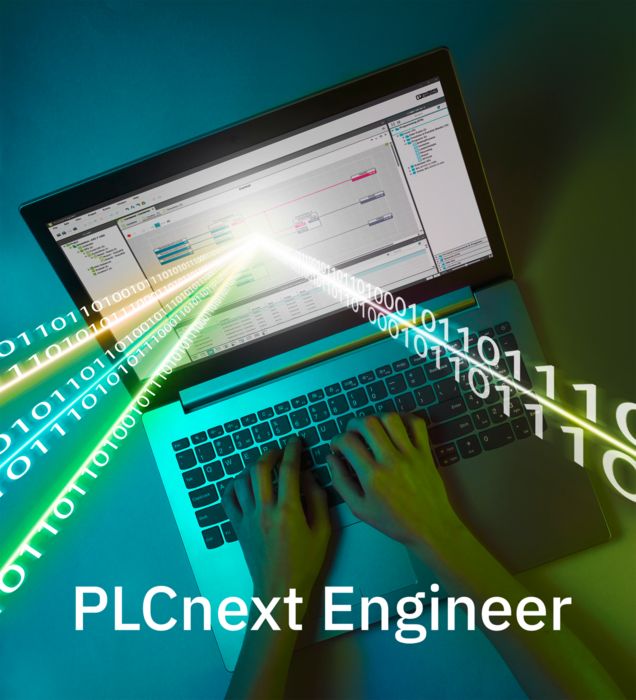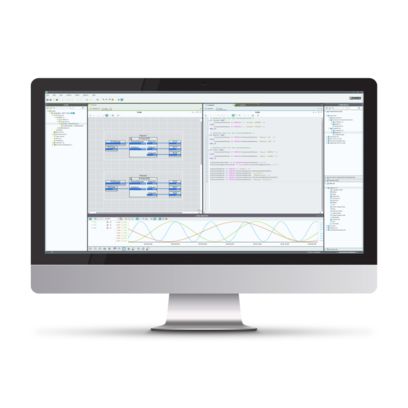
Engineering software platform for Phoenix Contact automation controllers. PLCnext Engineer is IEC 61131-3-compliant and is available free of charge under Downloads. Its functionality can be extended using paid add-ins. To do this, open the license configurator via the “Configure” button.
PLC programming software
Take advantage of our user-friendly and powerful PLC programming software to make your automation processes efficient. From OPC drivers to flexible software platforms for comprehensive engineering tasks – we have the ideal solution for you.With PLCnext Technology, we offer you a future-proof platform that enables seamless integration and maximum flexibility to increase your productivity and reduce operating costs.
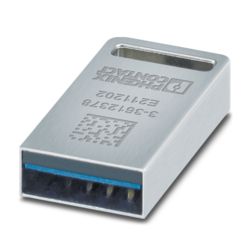
CmDongle for saving licenses for various software products
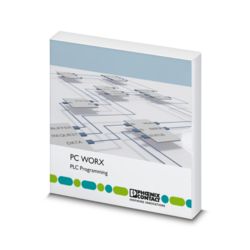
Software package for PC-based automation solutions, PC WORX BASIC license, contains all 5 IEC languages, without MSFC compiler, max. 2048 byte input and output data, version-specific license key
Software package for PC-based automation solutions, PC WORX PRO license, contains all 5 IEC languages, with MSFC compiler, max 128 kB input and output data, version-specific license key
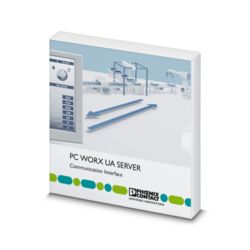
OPC UA server for communication with a maximum of 10 modular small-scale controllers (AXC 1xxx or ILC 1x1)
OPC UA server for communication with a maximum of 25 controllers
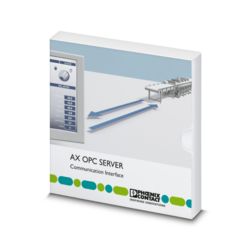
AX OPC SERVER, communication interface for OPC-capable visualization with PC WORX-based controls.
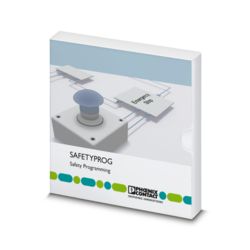
Programming software for INTERBUS-Safety systems and PROFIsafe controllers from Phoenix Contact, with graphical user interface according to IEC 61131-3 in function block diagram (FBD), ladder diagram (LD), and structured text (ST).
All of the libraries from the corresponding PLCopen libraries (Basic_SF, MatHandling_SF, Muting_SF, SafeMode_SF, and TwoHand_SF) can be used per project.
Software add-on for integration and execution of MATLAB/Simulink models on Remote Field and Axioline controllers
Engineering software for industrial automation PLCnext Engineer
PLCnext Engineer combines traditional PLC programming, the latest software development approaches, and AI-powered assistance features in an open development environment for industrial automation. With this approach, you can develop, test, and optimize automation solutions more efficiently – from the initial project idea right through to commissioning. PLCnext Engineer bundles all the key functions developing applications for PLCnext Control into a single software package:
• Programming in accordance with IEC 61131-3
• Visualization
• Configuration
• Diagnostics
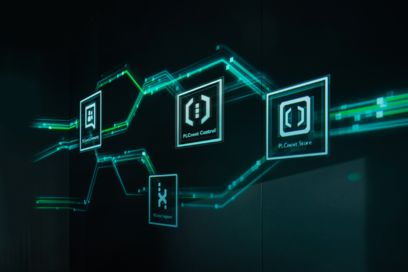
With the open architecture of PLCnext Technology, classic PLC programming, high-level languages, modern software development, and AI-powered functions can be connected flexibly with one another. This enables automation experts and IT experts to work on an application simultaneously, each using their own preferred tools and programming languages. This eliminates the limitations of proprietary development environments. In turn, this approach simplifies development processes, improves collaboration across different disciplines, and shortens the time to market for new applications.
AI support for more efficient engineering
The integrated generative AI helps developers solve tasks more quickly, use knowledge more efficiently, and speed up development processes. It provides context-based information, assists in the creation and optimization of applications, and makes it easier to work with existing program code, configurations, and documentation. This makes it possible to realize new applications more quickly and to extend and optimize existing automation solutions efficiently.
In particular in complex applications, AI helps to make existing project and application knowledge available more quickly, shortens training times, and lightens the workload for engineering teams in their day-to-day work. The user retains control at all times: Suggestions are displayed transparently, and changes are applied only after confirmation. This allows engineering teams to free up more time for innovation, shorten development cycles, and accelerate the implementation of new automation solutions.