
What is smart manufacturing? Smart manufacturing aims to merge the physical and digital worlds to enable networked and self-optimizing production.
Brief summary
The world of production is undergoing profound change. Driven by the rapid development of digital technologies, we are experiencing a transformation that is summed up by the term “smart manufacturing”. This intelligent manufacturing involves much more than just the automation of individual processes. It is a comprehensive digital revolution that aims to make production processes more efficient, more flexible, and more future-oriented.
Smart manufacturing: Definition
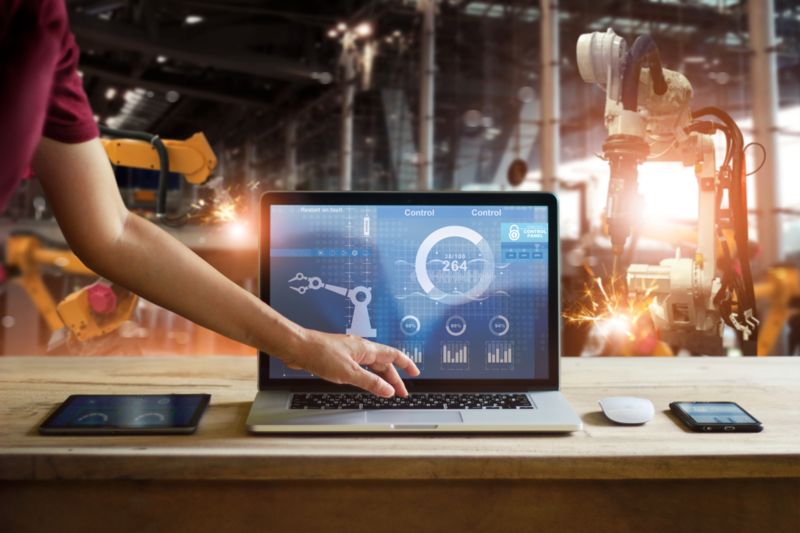
Smart manufacturing, also known as intelligent manufacturing, integrates modern information and communication technologies with advanced production processes. The aim is to create an efficient, networked, and adaptive production system, a core component of Industry 4.0.
Machines, systems, and products communicate and exchange data in real time. This allows processes to be monitored, analyzed, and optimized. The “intelligence” comes from the ability to learn from data, make predictions, and make autonomous decisions to improve processes.
The heart of intelligent manufacturing
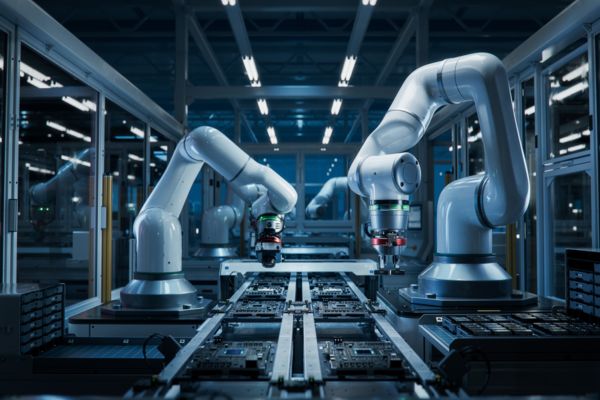
The smart factory is the physical implementation of smart manufacturing. In it, machines, equipment, and systems are digitally networked. Production processes are not only automated, but also intelligent and self-organizing.
Products communicate with machines and control their production path. Sensors continuously record data regarding machine status, product quality, and material flow. This data is analyzed in real time to identify bottlenecks, predict maintenance (predictive maintenance), and increase efficiency. The smart factory is flexible, adapts dynamically, and is ready for the future of production.
The core technologies
The implementation of smart manufacturing is made possible by a range of key technologies that work together to drive the digital transformation of production. These technologies form the backbone of intelligent manufacturing.
- IIoT and sensors: Networked machines with sensors record data such as temperature, pressure, and production status in real time.
- AI and machine learning: Analyze big data, identify patterns, make predictions, and optimize processes autonomously.
- Big data and analytics: Turn vast amounts of data into actionable insights for efficiency and strategic decision-making.
- Automation and robotics: Cobots work flexibly and precisely alongside people.
- Cloud and edge computing: Data processing centrally and directly at the machine for fast responses.
- Digital twins: Virtual replicas for simulation and optimization.
- Cybersecurity: Protection against attacks through robust security measures.
The advantages for companies
The implementation of smart manufacturing offers companies a wide range of advantages that go far beyond simply reducing costs, ultimately strengthening their competitiveness in the long term.
- Efficiency and productivity: Automation, real-time data analysis, and optimized processes reduce idle times and increase capacity utilization.
- Flexibility: Quick adaptation to new requirements, product versions, and market conditions.
- Quality: Early fault detection reduces rejects and increases product quality.
- Sustainability: Precise control of resources improves the environmental balance and reduces costs.
- New business models: Digital manufacturing enables innovative approaches such as Product-as-a-Service and creates competitive advantages.
Challenges during implementation
Complexity of system integration
The integration of heterogeneous systems, old equipment, and new technologies is a major challenge. Seamless communication between all components is crucial for an efficient smart manufacturing system.
Data security and data protection
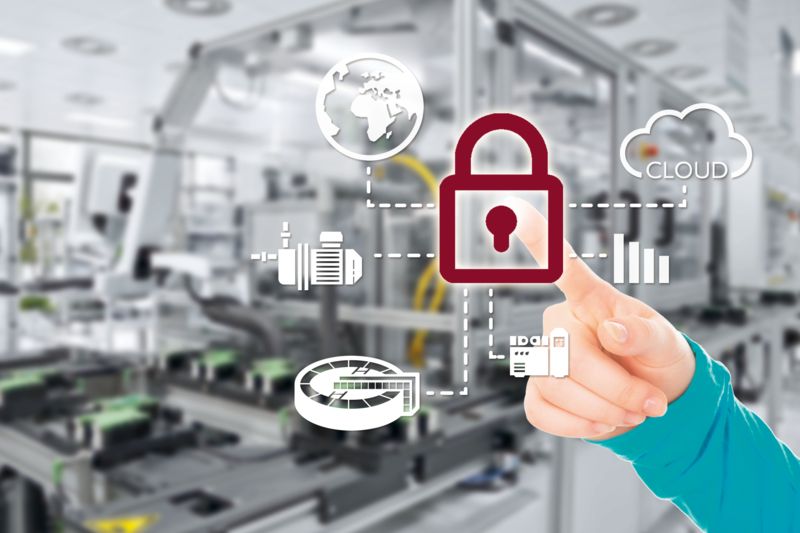
The networking of machines and the exchange of sensitive production data increase the risk of cyberattacks. To protect their systems and data, companies have to implement robust cybersecurity strategies.
Qualification of employees
The transition from manual to digitally controlled processes requires training in areas such as data analysis, AI applications, and the operation of intelligent systems.
High investment costs
Initial investments in new technologies, software, and infrastructure require clear strategies and proof of ROI.
Cultural change in the company
The digital transformation is not only a technological challenge, but also a cultural one. Resistance to change, fear of job losses, and the need to rethink traditional ways of working can slow down implementation. Open communication and employee involvement are crucial to success.
Summary
Smart manufacturing is not a passing trend, but rather the future of production. In a globally networked world, efficiency, flexibility, and intelligence are crucial to a company’s success. The digital transformation is progressing, driven by new technologies and dynamic markets.
Companies that use smart manufacturing are able to optimize processes, reduce costs, improve quality, and open up new areas of business. Intelligent manufacturing promotes innovation, creates new jobs, and requires continuous training. If you want to remain competitive, you need to invest in digitalization now.
Connect with our experts


More posts
What is predictive maintenance?
Predictive maintenance is a method that uses Industry 4.0 technologies to monitor the condition of machines and predict potential failures.
What is Industry 4.0?
Industry 4.0 describes the digital transformation of industry. Find out how IoT, AI, and big data can optimize production and increase flexibility.

Combatting cybercrime with full wind power
With effective security solutions, Phoenix Contact protects wind turbine turbines and other renewable energy generators against cybercrime.